


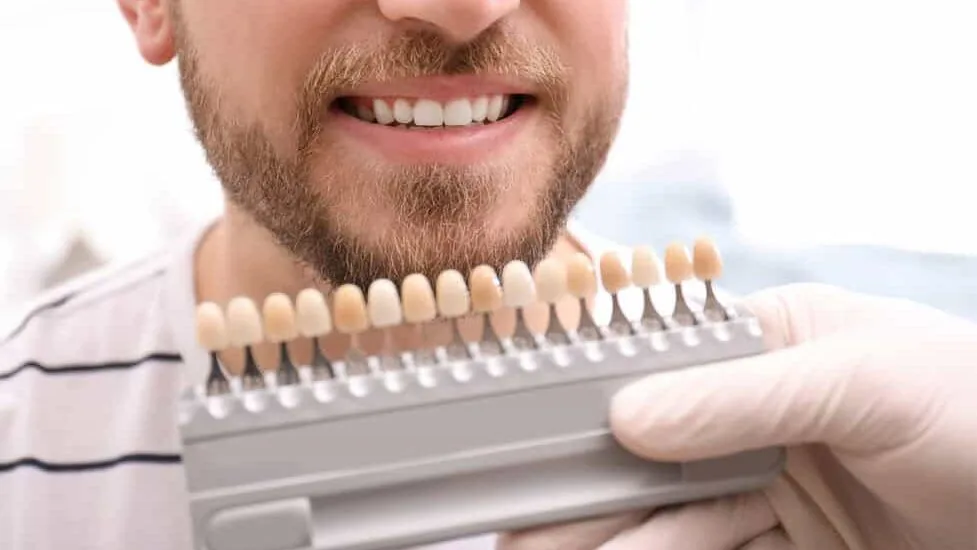
Dental veneers are thin, custom-made shells that cover the front surface of your teeth to improve their shape, color, and overall appearance. They work by bonding directly to your natural tooth structure, hiding imperfections like chips, cracks, gaps, severe staining, and uneven teeth. This article explains exactly how veneers are placed, what happens to your teeth during the process, and what you need to know before deciding if veneers are the right choice for your smile.
What Are Dental Veneers
Dental veneers are custom-made coverings crafted from porcelain or composite resin material. They fit over the front surface of your teeth, similar to how a contact lens fits over your eye. Unlike a dental crown, which covers the entire tooth, a veneer only covers the visible front portion.
According to the ADA, veneers can improve the appearance of teeth that are chipped, broken, worn, discolored, misshapen, or have gaps between them. They are considered a cosmetic treatment, meaning their main purpose is to enhance how your smile looks rather than repair structural damage.
We offer both porcelain and composite veneers here in Sonora. Porcelain veneers are known for their strength, stain resistance, and natural appearance. Composite veneers use a tooth-colored resin material and can often be completed in a single visit. Both options are built to look like your real teeth.
How the Veneer Process Works
The veneer process typically takes two to three appointments for porcelain veneers and sometimes just one visit for composite veneers. Here is what to expect at each stage.
During the first appointment, Dr. Jeff Berger and the entire team will evaluate your teeth, discuss your goals, and determine whether veneers are the right fit. This includes a thorough exam to check for any issues like cavities or gum disease that need to be treated first. A general dental exam before any cosmetic work helps make sure your teeth are healthy and ready for treatment.
The next step is tooth preparation. Your dentist removes a very thin layer of enamel from the front of each tooth that will receive a veneer. The standard amount removed is about 0.5 millimeters, roughly the thickness of a fingernail. This creates space for the veneer to sit flush with the rest of your teeth without looking bulky or unnatural.
After the teeth are prepared, an impression or digital scan is taken and sent to a dental lab where your custom veneers are created. This step usually takes one to two weeks. In the meantime, temporary veneers may be placed to protect your prepared teeth.
At the final appointment, the permanent veneers are bonded to your teeth using a strong dental adhesive. Your dentist checks the fit, color, and shape before cementing them in place and makes any last adjustments. You leave with a completely transformed smile.
For composite veneers, the process is faster. Your dentist applies the resin material directly to each tooth, sculpts it into the desired shape, and hardens it with a curing light. The entire procedure can be completed in one appointment, which is a good option for people who want results quickly.
What Happens to Your Real Teeth Under Veneers
What happens to your real teeth under veneers depends on how much enamel was removed during preparation and how well you maintain your oral health afterward. Your natural teeth remain intact beneath the veneers and continue to function normally.
The thin layer of enamel that is removed during preparation does not grow back. That is why the ADA notes that veneer treatment is not reversible. Once your teeth have been prepared, they will always need some form of covering to look and feel their best. This is an important factor to consider before moving forward.
Under a properly placed veneer, your tooth stays protected from further wear, staining, and minor damage. The veneer acts as a shield over the front surface. However, the tooth structure behind and around the veneer still needs regular care. Decay can still develop at the edges where the veneer meets the natural tooth if plaque is allowed to build up.
Routine cleanings and exams help catch any issues early. We use advanced diagnostic tools like CariVu and DIAGNOdent to detect decay even in its earliest stages, including around the margins of existing dental work.
Types of Veneers and How They Compare
The two main types of veneers are porcelain and composite. Each has clear strengths depending on your goals, budget, and timeline. The table below breaks down how they compare across key factors.
| Factor | Porcelain Veneers | Composite Veneers |
|---|---|---|
| Material | Thin ceramic shell made in a dental lab | Tooth-colored resin applied directly to the tooth |
| Typical Lifespan | 10 to 15 years (some last 20+ years) | 5 to 7 years |
| 10-Year Survival Rate | Approximately 95.5% (National Library of Medicine) | Lower; higher annual failure rate than porcelain |
| Stain Resistance | High; glazed surface resists discoloration | Moderate; more prone to staining over time |
| Enamel Removal | About 0.5 mm per tooth | Less enamel removal required |
| Number of Visits | 2 to 3 appointments over 1 to 2 weeks | Often completed in 1 visit |
| Cost | Higher | More affordable |
Sources: ADA MouthHealthy, National Library of Medicine systematic review of 6,500 veneers, Journal of Esthetic and Restorative Dentistry
Both porcelain and composite veneers are available and can be matched to your natural tooth color. Your dentist will help you choose the right option based on your specific situation.
Who Is a Good Candidate for Veneers
Veneers work best for people who have healthy teeth and gums but want to fix cosmetic imperfections. Good candidates typically have one or more of the following concerns.
Teeth that are chipped, cracked, or worn down from years of use respond well to veneers. The veneer covers the damaged area and restores a smooth, even appearance.
Severe staining that does not improve with professional teeth whitening is another common reason people choose veneers. Some stains from medications, trauma, or genetics sit deep within the tooth and cannot be reached by bleaching agents. Veneers cover those stains completely.
Teeth that are oddly shaped, too small, or have noticeable gaps between them can be reshaped with veneers. The result is a more balanced, symmetrical smile without the need for orthodontic treatment.
People who are interested in a broader smile makeover often combine veneers with other cosmetic dentistry treatments for a complete transformation.
Some families across Jamestown, Columbia, and Twain Harte have paired veneers with Invisalign to straighten teeth before placing veneers for a final polish.
If you grind your teeth at night, your dentist may recommend a nightguard to protect your veneers from damage. Grinding puts extra pressure on the bonded surface and can shorten the lifespan of both porcelain and composite restorations.
How to Care for Your Veneers After Placement
Caring for veneers is similar to caring for your natural teeth, with a few extra precautions.
Brush twice a day with a non-abrasive toothpaste and floss daily. Avoid using harsh whitening toothpastes that contain heavy grit, as these can scratch the surface of composite veneers over time. Porcelain veneers are more resistant to abrasion, but gentle care still helps them last longer.
Avoid biting into very hard objects like ice, hard candy, or pen caps. While porcelain veneers are strong, they can chip or crack under extreme force. Using your teeth as tools to open packages or tear tape is another habit to break.
Schedule dental cleanings and exams at least twice a year. Regular visits allow your dentist to check the margins of your veneers, look for early signs of wear, and remove plaque buildup that could lead to decay underneath. You can call us at 209-532-2915 to set up your next cleaning.
If you play contact sports, wear a mouthguard. A direct hit to the mouth can crack or dislodge a veneer. A custom-fit mouthguard from your dentist offers the best protection.
With proper care, porcelain veneers can last well over a decade. A systematic review published in the National Library of Medicine found that approximately 95.5% of porcelain veneers remained intact and functional after 10 years. Patient satisfaction rates range from 80% to 100%, according to clinical research.
Frequently Asked Questions About Dental Veneers
Why Do Dentists Advise Against Veneers
Dentists advise against veneers when a patient’s teeth or gums are not healthy enough for the procedure. Active tooth decay, advanced gum disease, or a habit of grinding teeth without wearing a nightguard can all make veneers a poor choice. The ADA also notes that veneer treatment is irreversible because enamel must be removed, so dentists want to make sure you have fully considered the commitment. A responsible dentist will always explore less invasive options first and recommend veneers only when they are the best solution for your specific goals.
How Long Do Veneers Actually Last
Veneers actually last between 10 and 15 years for porcelain and 5 to 7 years for composite, depending on your oral hygiene habits and lifestyle. A systematic review in the National Library of Medicine that analyzed over 6,500 porcelain veneers found a 10-year cumulative survival rate of 95.5%. Some porcelain veneers last 20 years or more with excellent care. We covered this topic in greater detail in a separate post about how long veneers really last.
What Is the Downside of Veneers
The downside of veneers is that the process requires removing a thin layer of enamel, which means it cannot be reversed. Once your teeth are prepared, they will always need a covering of some kind. Veneers can also chip or crack if you bite into very hard foods or grind your teeth without protection. Tooth sensitivity in the days following placement is possible but usually temporary. For most people in Sonora and across Tuolumne County, the cosmetic benefits far outweigh these drawbacks.
Can I Bite Into an Apple With Veneers
You can bite into an apple with veneers, but it is better to cut it into slices first. Biting directly into hard foods puts extra stress on the bonded edge of the veneer, which increases the risk of chipping over time. This applies to other hard foods like raw carrots, corn on the cob, and crusty bread. Cutting these foods into smaller pieces protects your veneers while still letting you enjoy everything you love.
Are Veneers Permanent
Veneers are considered a permanent cosmetic treatment because the enamel removed during preparation does not grow back. Your teeth will always need to be covered after that point. However, the veneers themselves are not permanent and will eventually need to be replaced. Porcelain veneers typically last 10 to 15 years, and composite veneers last about 5 to 7 years. Replacement involves removing the old veneer and bonding a new one, which is a straightforward process.
Do Veneers Look Natural
Veneers do look natural when they are custom-made and placed by a skilled dentist. Porcelain veneers are especially lifelike because the material mimics the translucency and light reflection of real tooth enamel. Each veneer is matched to the shade of your surrounding teeth so the result blends in seamlessly. You can see real examples of veneer results in our smile gallery, which shows before-and-after photos from actual patients here in Sonora.
Your Next Step
Dental veneers offer one of the most dramatic and lasting ways to transform your smile. Whether you are dealing with chips, stains, gaps, or teeth you have never felt confident about, veneers can make a visible difference in a matter of weeks.
We have been placing porcelain and composite veneers for families across Sonora, Jamestown, Columbia, and Twain Harte for years.
If you are not sure whether veneers or another option like teeth whitening would work better for your situation, a consultation is the best starting point.
For teeth that need more structural support, dental crowns may be a better fit than veneers, and your dentist can walk you through the differences.
Jeff Berger Dentistry is located at 19604 Mono Way in Sonora.
Call 209-532-2915 to schedule your veneer consultation today.
We also offer interest-free payment plans that you can apply for right in the office, making it easier to invest in the smile you have always wanted.
If you have questions about cost, timeline, or what to expect, reach out to our team at 209-532-2915 and we will walk you through everything.


