


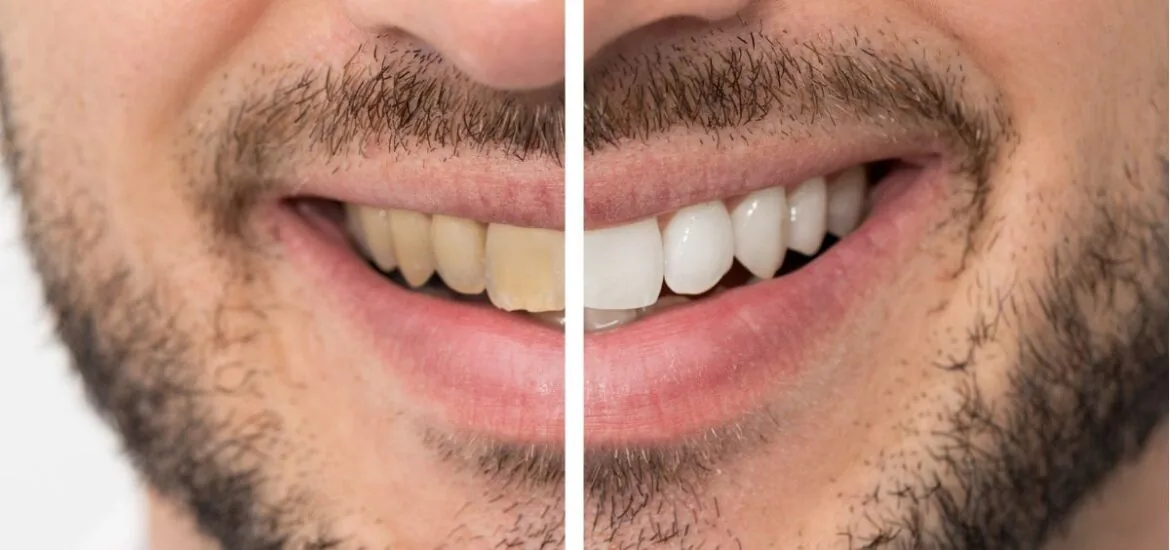
Teeth whitening is safe when performed correctly, especially under the supervision of a dentist. The American Dental Association (ADA) confirms that both hydrogen peroxide and carbamide peroxide are effective whitening agents that do not cause lasting damage to enamel when used as directed. This article covers the real risks and side effects of whitening, explains who should avoid it, and breaks down why professional supervision makes such a big difference in both safety and results.
What the ADA Says About Teeth Whitening Safety
The ADA has reviewed the evidence on teeth whitening and concluded that whitening products using hydrogen peroxide or carbamide peroxide are safe when used as directed. The ADA Seal of Acceptance program evaluates over-the-counter whitening toothpastes and strips for both safety and effectiveness. Products that earn the seal have been tested and shown to work without causing harm to tooth enamel.
Professional whitening done in a dental office carries an additional layer of safety. Your dentist controls the concentration of the bleaching agent, protects your gums with a barrier, and monitors your teeth throughout the process. This is why the ADA encourages anyone considering whitening to talk with their dentist first, especially if they have existing dental work, gum disease, or sensitive teeth.
Research published in the Journal of Dentistry found that professional-grade whitening agents did not cause significant changes in enamel microhardness when used at recommended concentrations. A separate study in the National Library of Medicine confirmed that low-concentration hydrogen peroxide products, around 3% to 6%, can be safely used without structural damage to the tooth surface. The key in every study is the same: proper use under proper guidance.
What Are the Risks of Teeth Whitening
The risks of teeth whitening are real but manageable, and most side effects are temporary. The two most common issues are tooth sensitivity and gum irritation.
Tooth sensitivity is the most frequently reported side effect. According to a peer-reviewed study published in the journal Dentistry, sensitivity affects between 43% and 80% of patients who whiten their teeth with peroxide-based products. This happens because the bleaching agent temporarily opens tiny pores in the enamel, allowing oxygen molecules to reach the dentin layer and nerve endings underneath. In most cases, sensitivity peaks within the first 24 hours and fades completely within a few days.
Gum irritation is the second most common risk. A study in the Journal of the American Dental Association found that gum irritation occurred in up to 50% of patients using over-the-counter whitening products. This happens when the bleaching gel leaks onto soft tissue, causing mild inflammation or even temporary chemical burns. Professional whitening reduces this risk significantly because a dentist applies a protective barrier to the gums before treatment begins.
Enamel erosion is a concern only when whitening products are overused or misused. The NIH has noted that excessive use of high-concentration bleaching agents can weaken enamel over time. However, when whitening is done at safe intervals and under professional guidance, the enamel remineralizes naturally between sessions and no permanent damage occurs.
Professional Whitening vs. Over-the-Counter Safety
Not all whitening methods carry the same level of risk. The concentration of the bleaching agent, the fit of the delivery system, and whether a dental professional is involved all affect how safe the process is.
In-office whitening uses higher concentrations of hydrogen peroxide, typically between 15% and 43%. That sounds like it would be riskier, but it is actually safer because your dentist controls every step. Your gums are shielded, the gel is applied precisely, and the treatment time is closely monitored. Dr. Jeff Berger and the entire team follow a careful protocol to protect both your enamel and soft tissue during every cosmetic dentistry procedure.
Over-the-counter strips and trays use lower concentrations, usually 3% to 10% hydrogen peroxide. While that sounds gentler, the risk comes from poor fit and unsupervised use. Strips do not conform perfectly to the curves of every tooth, which can lead to uneven whitening and gel contact with the gums. People also tend to overuse these products, applying them more often or for longer than the instructions recommend.
Custom take-home trays from a dentist fall in the middle. They use professional-grade gel at a moderate concentration and are molded to fit your exact bite. This reduces the chance of gel leaking onto your gums while still delivering strong results. We offer both in-office whitening and custom take-home trays here in Sonora so you can choose the method that feels right for you.
| Safety Factor | In-Office Professional | Dentist Take-Home Trays | Over-the-Counter Products |
|---|---|---|---|
| Peroxide Concentration | 15% to 43% (dentist-controlled) | 10% to 22% carbamide peroxide | 3% to 10% hydrogen peroxide |
| Gum Protection | Barrier applied by dentist | Custom-fit trays reduce leakage | No protection; strips may shift |
| Sensitivity Risk | Moderate, monitored in real time | Low to moderate | Low to moderate, higher if overused |
| Enamel Damage Risk | Very low with proper protocol | Very low with proper use | Low, but increases with overuse |
| Overall Satisfaction | Over 90% (NewMouth research) | High | Moderate; partial results common |
Sources: ADA, Journal of the American Dental Association, NewMouth, peer-reviewed studies in the National Library of Medicine
Who Should Avoid Teeth Whitening
Whitening is safe for most healthy adults, but certain groups should either avoid it or talk with a dentist before starting any treatment.
Children under 16 should not use whitening products without professional supervision. Their tooth enamel is still developing, and bleaching agents can cause irritation or uneven results on teeth that have not fully matured.
Pregnant and breastfeeding women are advised to wait. There is not enough research to confirm the safety of whitening agents during pregnancy, and hormonal changes can increase the risk of gum inflammation and sensitivity. The ADA recommends postponing elective cosmetic procedures until after pregnancy.
Anyone with untreated cavities, active gum disease, cracked teeth, or exposed roots should address those issues first. Whitening gel can seep into damaged areas and cause significant discomfort or further damage.
A general dental exam before whitening helps identify and treat any problems that could make the process unsafe.
People with existing dental crowns or bridges should know that whitening only works on natural tooth structure. Bleaching agents will not change the color of dental restorations, which can lead to a mismatched smile if not planned carefully.
Dental veneers also do not respond to bleaching. A dentist can help you create a whitening plan that accounts for any existing dental work so your smile looks consistent.
How to Protect Your Enamel During and After Whitening
A few simple steps before, during, and after whitening can reduce side effects and keep your enamel strong.
Start by using a sensitivity toothpaste for at least one week before your whitening appointment. Products containing potassium nitrate help calm the nerve endings inside your teeth and reduce the chance of post-treatment discomfort. A study published in PubMed found that applying a desensitizing agent with 3% potassium nitrate and 0.11% fluoride before whitening significantly decreased tooth sensitivity compared to a placebo.
After whitening, avoid acidic and heavily pigmented foods and drinks for at least 48 hours. Coffee, red wine, tomato sauce, and citrus can both restain and irritate freshly whitened teeth. Sticking to a soft, neutral diet during that window gives your enamel time to remineralize and your results time to set.
Use only products with the ADA Seal of Acceptance for any at-home maintenance. This seal means the product has been independently tested for both safety and effectiveness. Whitening toothpastes with this seal can help maintain your shade between professional touch-ups without risking enamel damage.
Keep up with regular dental cleanings and exams. We use advanced diagnostic technology like CariVu and DIAGNOdent to catch early signs of enamel wear or decay. Staying on top of your oral health means you can whiten safely year after year.
What About Sensitivity During the Procedure
If you have a history of tooth sensitivity or dental anxiety, professional whitening gives you options that over-the-counter products cannot. We can adjust the concentration of the bleaching gel, shorten the application time, or add a desensitizing treatment before or after the procedure.
For patients who feel nervous about any dental procedure, sedation dentistry is available. Options range from nitrous oxide for mild relaxation to the NuCalm system, which uses a natural relaxation substance to bring you to the early stages of sleep. You stay comfortable and aware while we take care of everything.
Most people who choose professional whitening here in Sonora describe the process as painless. Any sensitivity that does occur typically lasts 24 to 48 hours and resolves on its own. If you are concerned, call us at 209-532-2915 to talk through your options before scheduling.
Frequently Asked Questions About Teeth Whitening Safety
Do Dentists Recommend Teeth Whitening
Dentists do recommend teeth whitening for patients who are good candidates for the procedure. The ADA supports whitening as a safe and effective cosmetic treatment when done under professional supervision or with ADA-approved products. Most dental professionals recommend an exam and cleaning before whitening to make sure your teeth and gums are healthy enough for treatment. Families in Sonora, Jamestown, and Columbia can schedule a whitening consultation to find out which method is the best fit.
Can Yellow Teeth Become White Again
Yellow teeth can become white again in most cases, especially when the discoloration comes from surface stains caused by coffee, tea, tobacco, or aging. Professional whitening can lighten teeth by up to 8 to 10 shades in a single visit, according to dental industry data. Deeper stains caused by medications like tetracycline or by internal tooth damage may not respond as well to bleaching alone. In those situations, porcelain veneers can cover persistent discoloration and give you a consistently bright smile.
What Destroys Teeth the Most
What destroys teeth the most is a combination of acid exposure, sugar, and neglect. According to the CDC, untreated tooth decay affects about 26% of adults in the United States. Acidic foods and drinks, including soda, citrus, and sports drinks, erode enamel over time. Sugar feeds the bacteria that produce acid in your mouth, accelerating decay. Poor brushing and flossing habits allow plaque to build up and harden into tarite. Compared to these everyday threats, professional teeth whitening poses very little risk to enamel when done correctly and at safe intervals.
Does Whitening Damage Tooth Enamel
Whitening does not damage tooth enamel when used at recommended concentrations and for the recommended amount of time. A peer-reviewed study in the National Library of Medicine found no significant enamel microhardness changes after whitening with professional-grade hydrogen peroxide products. Enamel damage becomes a concern only with chronic overuse or with products that are not ADA-approved. Professional supervision removes this risk because your dentist monitors concentration, timing, and the condition of your teeth at every step.
Is Professional Whitening Safer Than At-Home Kits
Professional whitening is safer than at-home kits for most people. Your dentist evaluates your teeth and gums before treatment, protects your soft tissue during the procedure, and uses clinical-grade products that have been tested for safety. Over-the-counter kits lack that level of oversight. A study in the Journal of the American Dental Association found that gum irritation rates were significantly higher with store-bought products compared to dentist-supervised treatments. If you want the safest possible results, professional care is the clear choice.
Can You Whiten Teeth Too Often
You can whiten teeth too often, and doing so increases the risk of sensitivity and enamel wear. Professional in-office whitening can safely be repeated about once a year for most people. Custom take-home trays can be used for periodic touch-ups every few months. Over-the-counter strips should be limited to one or two full cycles per year. If you notice increasing sensitivity between sessions, that is a signal to stop and talk with your dentist. We help patients across Tuolumne County build a personalized whitening schedule that keeps their smile bright without putting their enamel at risk.
The Bottom Line
Teeth whitening is one of the safest and most popular cosmetic dental procedures available today. The risks are real but minor, and nearly all of them can be avoided or managed with professional supervision. Whether you choose in-office whitening for immediate results or custom take-home trays for a more gradual approach, having a dentist involved makes the process safer, more effective, and more comfortable.
We have been helping families across Sonora and Twain Harte achieve brighter smiles for years. You can see real before-and-after results in our smile gallery.
If you are considering whitening your teeth and want to know whether you are a good candidate, we are here to help.
Jeff Berger Dentistry is located at 19604 Mono Way in Sonora.
Call 209-532-2915 to schedule a whitening consultation today.
We also offer interest-free financing to help make cosmetic treatments affordable for every budget.
Reach out to our team at 209-532-2915 with any questions.


