


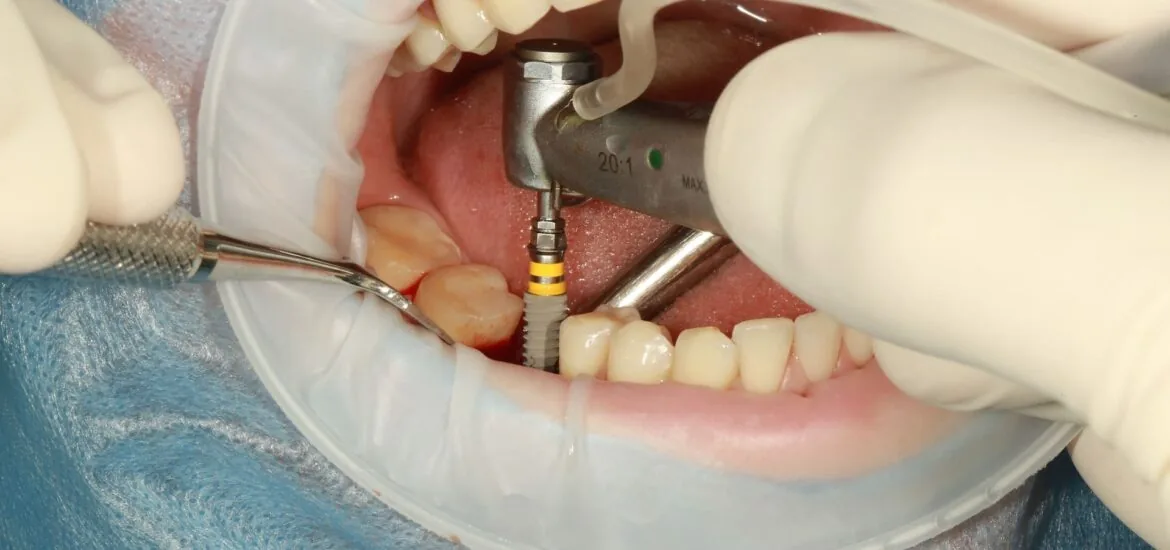
Dental implants are small, threaded titanium posts that a dentist surgically places into the jawbone to replace missing tooth roots. Once the jawbone heals around the post through a process called osseointegration, the implant supports an artificial tooth such as a crown, bridge, or denture. According to the American Dental Association, dental providers in the United States place over 3 million implants every year, and that number continues to grow. The American College of Prosthodontists estimates that approximately 178 million Americans are missing at least one tooth, making dental implants one of the most important restorative options in modern dentistry. This article explains exactly what dental implants are, how each part works, what the procedure involves, and what to expect from recovery through long-term care.
What Are Dental Implants and How Do They Work?
Dental implants work by replacing the root of a missing tooth with a biocompatible titanium or zirconia post that fuses directly with the jawbone. This fusion creates a stable, permanent anchor that holds an artificial tooth in place. The implant functions like a natural tooth root, transferring chewing force into the bone and stimulating the jawbone to maintain its density and shape. Without that stimulation, the jawbone gradually shrinks after tooth loss, a process called resorption that can change facial structure over time.
The U.S. dental implant market was valued at approximately $1.5 billion in 2024 and is projected to reach $3.7 billion by 2032 at an 11.4% compound annual growth rate, according to Polaris Market Research. That growth reflects both advancing technology and increasing patient demand for a tooth replacement that looks, feels, and functions like a natural tooth. Unlike removable dentures or fixed bridges, dental implants do not rely on neighboring teeth for support. Each implant stands on its own, anchored independently in the jawbone.
What Are the Parts of a Dental Implant?
The parts of a dental implant are the implant post, the abutment, and the restoration. Each part serves a specific function in the system, and all three work together to create a complete artificial tooth.
The implant post is a small, threaded screw made of titanium or zirconia. A dentist or oral surgeon places the post directly into the jawbone during a surgical procedure. The post replaces the natural tooth root and provides the structural foundation for everything above it. Titanium accounts for approximately 93% of all dental implant materials used worldwide, according to market data, because of its exceptional biocompatibility and strength. The jawbone accepts titanium as if it were natural tissue, growing new bone directly onto the post’s surface over the following months.
The abutment is a small connector piece that screws into the top of the implant post. The abutment extends just above the gumline and serves as the bridge between the buried post and the visible artificial tooth. Your dentist attaches the abutment after the implant post has fully integrated with the jawbone.
The restoration is the visible artificial tooth that sits on top of the abutment. Restorations include individual dental crowns for single missing teeth, bridges for multiple missing teeth, and full or partial dentures for patients missing most or all of their teeth. Each restoration is custom-fabricated to match the size, shape, and color of your natural teeth.
Patients who are missing all of their teeth in one or both arches may choose implant-supported dentures, which snap onto implant posts for far greater stability than traditional removable dentures. The specific type of restoration your dentist recommends depends on the number of missing teeth, the location in your mouth, and your functional and aesthetic goals.
What Are Dental Implants Made Of?
Dental implants are made of either titanium or zirconia, both of which are classified as biocompatible materials by the U.S. Food and Drug Administration. The FDA regulates dental implants as medical devices and requires manufacturers to demonstrate that their systems are safe and effective before they can be marketed in the United States. Biocompatibility testing confirms that the materials do not cause irritation, allergic reaction, or adverse effects when implanted in human tissue.
Titanium implants are the most widely used option due to their proven track record. Delta Dental reports that titanium implants have a success rate of 97% and a 10-year survival rate of nearly 99%. Titanium’s surface properties encourage bone cells to grow directly onto the post, creating the strong fusion that makes implants so stable. Zirconia implants are a newer ceramic alternative that works well for patients with metal sensitivities or autoimmune conditions. Zirconia’s white color also provides an aesthetic advantage in cases where gum recession might expose the top of the implant, since titanium’s dark metal can be visible through thin gum tissue.
What Is Osseointegration and Why Does It Matter?
Osseointegration is the biological process where the jawbone grows around and fuses with the surface of a dental implant, creating a permanent structural bond. The term combines “osteo” (bone) and “integration” (to make whole). Osseointegration is what separates dental implants from every other tooth replacement option. Dentures sit on the gums. Bridges attach to neighboring teeth. Implants become part of the bone itself.
The osseointegration process begins immediately after the implant post is placed. The body sends healing cells to the surgical site, and new blood vessels form around the titanium surface. Over the following weeks and months, specialized bone-forming cells called osteoblasts produce new bone tissue that grows directly onto the implant’s threaded surface. The new bone gradually matures and strengthens, locking the implant firmly in place. This process typically takes 3 to 6 months, according to clinical consensus across multiple sources. Implants in the lower jaw tend to integrate faster, in 3 to 4 months, because lower jawbone is denser. Upper jaw implants often require 4 to 6 months due to the naturally softer bone structure in that area.
Osseointegration matters because it gives implant dentistry its defining advantage: permanence. A fully integrated implant transfers chewing force into the jawbone the same way a natural tooth root does. That mechanical stimulation tells the bone to maintain its density and volume, preventing the bone loss that occurs when a tooth root is missing. Without implant-driven stimulation, the jawbone in an extraction site can lose up to 25% of its width in the first year alone, according to data cited by the American Academy of Periodontology.
How Long Does the Dental Implant Process Take?
The dental implant process takes approximately 4 to 9 months from start to finish, depending on healing speed, bone density, and whether bone grafting is needed before placement. The majority of that time is spent waiting for osseointegration, not in the dental chair. Each individual appointment is relatively short, but the biological healing between appointments cannot be rushed.
The process follows these general steps:
- Consultation and planning. Your dentist examines your teeth, gums, and jawbone using X-rays or 3D imaging. This evaluation determines whether you have enough healthy bone to support an implant and identifies any conditions that need treatment first, such as decay or gum disease. The consultation usually takes one appointment.
- Bone grafting (if needed). Approximately 50% of dental implant procedures require bone grafting to rebuild jawbone volume before the implant can be placed, according to clinical data. Bone grafting adds 4 to 9 months to the overall timeline because the graft material must integrate with the existing bone before it can support an implant.
- Implant placement surgery. The surgeon numbs the area with local anesthesia, makes a small incision in the gum tissue, creates a precise channel in the jawbone, and places the titanium post. The incision is closed with stitches. The procedure typically takes 1 to 2 hours per implant. If the implant is near the front of your mouth, a temporary tooth fills the gap while you heal.
- Osseointegration (healing phase). The jawbone fuses with the implant post over 3 to 6 months. Your dentist monitors progress at regular checkup appointments during this period.
- Abutment placement. Once the implant has fully integrated, a minor procedure attaches the abutment connector to the top of the post. This step usually takes about one hour.
- Final restoration. Your dentist takes impressions and places the custom crown, bridge, or denture onto the abutment. The restoration is color-matched and shaped to blend with your natural teeth. This step takes one to two appointments.
Patients in Sonora, CA benefit from consulting with a dentist who has advanced implant training, since precise surgical technique during placement directly affects how well the implant integrates and how long it lasts.
Is Getting a Dental Implant Painful?
Getting a dental implant is not painful during the procedure because your dentist uses local anesthesia to completely numb the surgical area. According to Cleveland Clinic, patients should not feel any pain during implant placement. After surgery, mild discomfort and swelling are normal and typically peak within the first 2 to 3 days. Over-the-counter pain relievers like ibuprofen manage post-surgical soreness effectively for most patients. Initial soft tissue healing takes about 1 to 2 weeks, during which time any tenderness gradually fades.
Sedation dentistry is available for patients who feel anxious about oral surgery. Sedation options range from mild oral sedation to deeper levels that allow you to remain comfortable and relaxed throughout the procedure. Many patients describe the implant experience as less uncomfortable than they expected, and the recovery as comparable to a standard tooth extraction.
Do All Your Teeth Get Pulled for Dental Implants?
No, all your teeth do not get pulled for dental implants. Dental implants replace only the teeth that are already missing or the teeth that are too damaged to save. Healthy natural teeth remain untouched. In fact, preserving as many natural teeth as possible is always the first priority in any treatment plan.
Implant treatment scales to match the number of missing teeth. A single missing tooth requires one implant and one crown. Several missing teeth in a row can be replaced with two implants supporting a bridge. Patients who are missing all teeth in one or both arches can receive full-arch restorations supported by as few as four to six strategically placed implants. The All-on-4 approach, which uses four implants to support an entire arch of teeth, has a prosthetic survival rate of 98.8%, according to published clinical data. Your dentist designs the treatment plan around your specific situation, and that plan never involves removing teeth that are healthy and functional.
What Are the Benefits of Dental Implants?
The benefits of dental implants include restored chewing ability, preserved jawbone density, improved speech, enhanced appearance, and a success rate between 95% and 98%. A systematic review published in the Journal of Clinical Periodontology found a 10-year implant survival rate of 96.4%, with a prediction interval of 91.5% to 99.4%. Those numbers make dental implants one of the most reliable procedures in all of dentistry.
- Implants restore full chewing function, allowing you to eat the foods you enjoy without worrying about slipping or shifting.
- The titanium post stimulates the jawbone and prevents the bone loss that occurs after tooth loss, preserving facial structure and preventing the sunken appearance that can develop over time.
- Implants improve speech clarity by eliminating the movement and air gaps that can affect pronunciation with removable dentures.
- Unlike bridges, implants do not require altering or shaving down adjacent healthy teeth. Each implant replaces one missing tooth without involving its neighbors.
- Implants feel and function like natural teeth once healed, so there is nothing to remove at night and no adhesive to apply.
- With proper care, the implant post itself can last a lifetime, while the crown or bridge on top typically lasts around 15 years before needing replacement.
The American Academy of Cosmetic Dentistry reports that 99.7% of Americans consider a smile an important social asset. Dental implants address both the functional and the emotional impact of tooth loss by giving patients a restoration that looks and feels indistinguishable from natural teeth.
What Is the Difference Between Dental Implants and Bridges?
The main difference between dental implants and bridges is that implants replace the tooth root independently, while bridges rely on adjacent natural teeth for support. A dental bridge requires the dentist to remove enamel from the teeth on either side of the gap so crowns can be placed over them to anchor the bridge. That enamel removal permanently alters healthy teeth and can weaken their structure over time. A dental implant replaces only the missing tooth without involving the neighboring teeth at all.
| Feature | Dental Implant | Dental Bridge |
|---|---|---|
| Support Structure | Titanium post fused to jawbone | Anchored to adjacent natural teeth |
| Adjacent Teeth Affected | None | Enamel removed from 1-2 neighboring teeth |
| Jawbone Preservation | Yes, stimulates bone density | No, bone loss continues under the gap |
| Average Lifespan | Post: lifetime; Crown: ~15 years | 5 to 15 years |
| 10-Year Survival Rate | 96.4% | Varies by type, generally lower |
| Removable? | No (permanent) | No (cemented in place) |
| Cleaning | Brush and floss like natural teeth | Requires floss threader under bridge |
| Number of Teeth Replaced | One or more (independent) | One or more (requires anchor teeth) |
Sources: Cleveland Clinic; American Academy of Periodontology; Journal of Clinical Periodontology; American Dental Association
Both options have their place in restorative dentistry. Bridges work well when adjacent teeth already need crowns or when a patient is not a candidate for implant surgery. However, for patients who qualify, implants offer the strongest long-term outcome because they preserve jawbone health and leave neighboring teeth completely intact. We can evaluate which option best fits your specific situation during a dental exam.
Who Is a Good Candidate for Dental Implants?
A good candidate for dental implants is anyone over the age of 18 with adequate jawbone density, healthy gums, and no uncontrolled chronic health conditions. According to Cleveland Clinic, there is no upper age limit for dental implants. The primary requirement is having enough healthy bone in the jaw to support the implant post. If bone volume is insufficient due to long-term tooth loss or resorption, a bone graft can rebuild the site before implant placement.
Candidates should also have stable overall health. Conditions like uncontrolled diabetes, autoimmune disorders, and active cancer treatment can slow healing and reduce the likelihood of successful osseointegration. Patients taking certain medications, such as bisphosphonates for osteoporosis, should discuss their medication history with their dentist before proceeding. Good oral hygiene habits are essential because plaque buildup around implants can lead to peri-implantitis, an infection of the tissue surrounding the implant that can cause bone loss and implant failure if untreated.
What Disqualifies You From Dental Implants?
The factors that disqualify you from dental implants include active smoking, uncontrolled gum disease, severe jawbone loss without grafting eligibility, and certain unmanaged systemic health conditions. Smoking is the single largest modifiable risk factor. A study published in the National Library of Medicine found that smokers have a 140.2% higher risk of implant failure compared to non-smokers. Nicotine restricts blood flow to the gums, weakens immune response, and slows bone healing, all of which directly undermine osseointegration.
Active periodontal disease also disqualifies patients until it is treated and controlled. Bacterial infection in the gums compromises the bone and soft tissue that the implant depends on for stability. Patients with severe bone loss may need grafting before implants can be placed, which extends the treatment timeline but does not necessarily disqualify them. The UT Southwestern Medical Center emphasizes that eligibility is determined on a case-by-case basis after a thorough evaluation of oral health, medical history, and lifestyle factors.
How Do You Care for Dental Implants?
You care for dental implants the same way you care for natural teeth: brushing twice daily, flossing once daily, and visiting your dentist for professional cleanings every six months. Implants cannot develop cavities because they are made of titanium and porcelain, not natural enamel. However, the gum tissue and bone surrounding the implant are still vulnerable to infection if plaque is allowed to accumulate.
Use a soft-bristled toothbrush and non-abrasive toothpaste to clean around the implant without scratching the restoration surface. Floss carefully around the implant post and abutment to remove food particles and bacteria from the gumline. Patients who grind their teeth should wear a custom nightguard to protect both the implant restoration and surrounding natural teeth from excessive force. Avoid using tobacco products, since smoking remains a risk factor for implant complications even after successful placement. Regular professional cleanings give your dentist the opportunity to check the implant, evaluate the surrounding bone with periodic X-rays, and catch any early signs of peri-implantitis before it progresses.
How Long Do Dental Implants Last?
Dental implants can last a lifetime with proper care. The titanium post, once fully integrated with the jawbone, becomes a permanent part of your oral anatomy. A systematic review in the Journal of Clinical Periodontology reported a 10-year survival rate of 96.4% for dental implants, and a study published in the National Library of Medicine found a 15-year survival rate of 94%. Cleveland Clinic confirms that with brushing, flossing, and regular dental visits, implants can last a lifetime.
The restoration on top of the implant, whether a crown, bridge, or denture, does have a defined lifespan. Most crowns and bridges supported by implants last approximately 15 years before needing replacement due to normal wear. Denture attachments may need servicing every 5 to 7 years. Replacement of the restoration involves removing the worn component and attaching a new one to the same implant post, a much simpler process than the original surgery. The implant post itself remains in the bone and does not need to be replaced as long as it stays healthy and well-maintained.
Frequently Asked Questions
What Do You Wish You Knew Before Getting Dental Implants?
Most patients wish they knew that the dental implant process takes several months from start to finish, not just a single appointment. The 3-to-6-month osseointegration period is the longest phase, and it cannot be shortened. Patients also wish they knew how natural implants feel once fully healed. After the initial recovery, most patients report that their implant feels indistinguishable from a real tooth.
What Does No One Tell You About Dental Implants?
What many patients do not hear upfront is that the implant post itself is designed to last a lifetime, but the crown on top will eventually need replacement, typically after about 15 years. Knowing this helps patients plan for the long-term maintenance cycle and set realistic expectations for the total investment over their lifetime.
Are Dental Implants Safe?
Yes, dental implants are safe. The U.S. Food and Drug Administration regulates dental implants as medical devices and requires manufacturers to prove their systems meet international safety standards before they can be sold in the United States. Biocompatibility testing confirms that titanium and zirconia do not cause adverse reactions when implanted in human tissue. According to the FDA, dental implant materials have well-established safety profiles backed by decades of clinical use.
Can You Get a Dental Implant Years After Losing a Tooth?
Yes, you can get a dental implant years after losing a tooth, but the jawbone at the extraction site may have lost volume during that time. Bone resorption begins within weeks of tooth loss and progresses over the following months and years. If significant bone loss has occurred, a bone graft can rebuild the site before the implant is placed. Your dentist evaluates the available bone with imaging and determines whether grafting is needed.
How Many Implants Do You Need for a Full Mouth?
A full mouth of implants typically requires 4 to 8 implants per arch, depending on the type of restoration and the patient’s bone density. The All-on-4 technique uses four strategically angled implants to support a full arch of teeth, while some patients benefit from six or eight implants for additional stability. Your dentist designs the implant plan based on your specific jawbone anatomy and restoration goals.
Is Getting a Dental Implant More Painful Than a Tooth Extraction?
Getting a dental implant is not more painful than a tooth extraction for most patients. Both procedures use local anesthesia to numb the area completely during surgery. Post-surgical discomfort from implant placement is generally comparable to what patients experience after an extraction. Over-the-counter pain relievers and ice packs manage swelling and soreness effectively in the days following the procedure.
Putting It All Together
Dental implants replace missing tooth roots with biocompatible titanium posts that fuse permanently with the jawbone through osseointegration. The three-part system of post, abutment, and restoration works together to create an artificial tooth that looks, feels, and functions like the real thing. With success rates between 95% and 98% and the potential to last a lifetime, dental implants represent the gold standard in tooth replacement. The procedure takes several months from start to finish, but the result is a stable, permanent restoration that preserves jawbone health and protects neighboring teeth.
At Jeff Berger Dentistry, we have advanced training in implant placement and are happy to help you determine whether dental implants are the right option for your smile. Call us at 209-532-2915 to schedule your consultation.


