


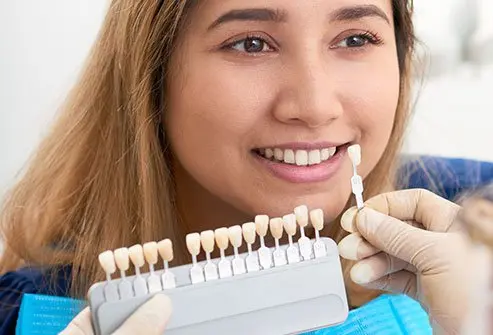
Dental veneers cost between $250 and $2,500 per tooth, depending on the material, the dentist’s experience, and your geographic location. According to a 2023 national pricing survey conducted by ASQ360 Market Research, the average cost for a single porcelain veneer in the United States is $1,765. Composite resin veneers cost significantly less, averaging $800 to $1,100 per tooth. The wide price range reflects real differences in material durability, lab fabrication methods, and the number of teeth being treated. This article breaks down veneer costs by type, explains the factors that shape your final price, covers what dental insurance does and does not pay for, and helps you evaluate whether dental veneers are a strong long-term investment for your smile.
How Much Do Dental Veneers Cost by Type?
Dental veneers cost different amounts based on the material used to fabricate them. The two most common types are porcelain veneers and composite resin veneers. Each type serves the same basic purpose, covering the front surface of a tooth to improve its appearance, but the materials, fabrication process, and longevity differ significantly. Those differences drive the cost gap between the two options.
The U.S. cosmetic dentistry market reached $4.25 billion in 2024, according to Precedence Research, and veneers represent one of the fastest-growing segments within that market. The global dental veneer market alone was valued at $2.47 billion in 2024, with porcelain veneers generating the highest per-procedure revenue of any cosmetic dental treatment. Growing demand has expanded patient access to multiple veneer types at different price points, giving patients more flexibility in matching their budget to their goals.
How Much Do Porcelain Veneers Cost Per Tooth?
Porcelain veneers cost between $900 and $2,500 per tooth, with a national average of $1,765. That figure comes from a 2023 procedural cost study by ASQ360 Market Research, which surveyed dental practices across all 50 states. The price per tooth varies based on the dentist’s level of cosmetic training, the quality of the dental laboratory used, and regional cost-of-living differences. Porcelain veneers require two to three office visits because each veneer is custom-fabricated in a dental lab from a glass-ceramic material. Lab fabrication adds time and precision but produces a veneer that closely replicates the translucency and light-reflecting properties of natural tooth enamel.
Porcelain’s non-porous ceramic surface resists staining from coffee, tea, and red wine far better than composite resin. A large systematic review published in the Journal of Clinical Medicine found that porcelain veneers have a cumulative survival rate of 95.5% at 10 years across roughly 6,500 veneers studied. That durability means the higher upfront cost of porcelain translates to a lower cost per year of use compared to materials that need earlier replacement.
How Much Do Composite Veneers Cost?
Composite veneers cost between $250 and $1,500 per tooth, according to data from GoodRx and Authority Dental. The national average for a lab-fabricated composite veneer is approximately $1,100, while a chairside composite veneer applied directly in the dental office averages around $800. Composite resin is a polymer-based material that the dentist sculpts and bonds to the tooth in a single visit, eliminating the need for lab fabrication and temporary veneers.
The lower cost of composite veneers reflects both the simpler fabrication process and the shorter lifespan of the material. Composite resin veneers typically last 5 to 7 years before needing replacement, according to a 2018 review published in the National Library of Medicine. Composite is also more porous than porcelain, which means it absorbs food and beverage pigments over time and requires more frequent polishing to maintain its appearance. Patients who choose composite veneers often do so for single-tooth corrections or as an affordable entry point into cosmetic dentistry before committing to porcelain.
Why Are Porcelain Veneers More Expensive Than Composite?
Porcelain veneers are more expensive than composite because they require custom lab fabrication, use a higher-grade ceramic material, and deliver significantly longer functional life. The cost difference is not arbitrary. It reflects measurable differences in material science, manufacturing process, and clinical durability that directly affect how long the veneer lasts and how natural it looks.
Porcelain veneers are fabricated in a dental laboratory by a trained ceramist who hand-layers or presses glass-ceramic material into a custom mold taken from impressions of the patient’s prepared teeth. This process produces a veneer with the translucency, surface texture, and color depth that closely mimic natural enamel. Composite veneers, by contrast, are built directly on the tooth using resin that the dentist sculpts and light-cures in a single appointment. The chairside process is faster and less expensive but produces a result that is less translucent and less stain-resistant than porcelain.
| Feature | Porcelain Veneers | Composite Veneers |
|---|---|---|
| Average Cost Per Tooth | $900 to $2,500 | $250 to $1,500 |
| National Average | $1,765 | $800 to $1,100 |
| Average Lifespan | 10 to 20 years | 5 to 7 years |
| 10-Year Survival Rate | 95.5% | Not widely studied at 10 years |
| Stain Resistance | High (non-porous ceramic) | Low (porous resin) |
| Fabrication | Dental laboratory, 2-3 visits | Chairside, often 1 visit |
| Enamel Removal | 0.5 to 0.7 mm | 0.1 to 0.3 mm or none |
| Estimated Cost Per Year of Use | ~$88 to $167 | ~$114 to $250 |
Sources: ASQ360 Market Research, 2023; GoodRx; Authority Dental; Journal of Clinical Medicine systematic review, 2021; National Library of Medicine, 2018
The cost-per-year calculation in the table above reveals something important. Porcelain veneers cost more upfront, but their longer lifespan often makes them less expensive per year of use than composite. A porcelain veneer that costs $1,500 and lasts 15 years works out to roughly $100 per year. A composite veneer that costs $800 and lasts 6 years works out to roughly $133 per year, and it requires a second round of replacement costs within the same 15-year window. The American Academy of Cosmetic Dentistry reports that 99.7% of Americans consider a smile an important social asset, which helps explain why many patients view the porcelain option as a better long-term return on their investment.
What Factors Affect the Cost of Dental Veneers?
The cost of dental veneers depends on several factors beyond the material type. Each factor adds or subtracts from the final price, and understanding them helps you evaluate a veneer quote accurately.
- Material type. Porcelain costs more than composite due to lab fabrication and superior durability. No-prep or ultra-thin veneers like Lumineers fall in the $800 to $2,000 per tooth range, according to Authority Dental.
- Number of teeth. Most patients treat 4 to 8 upper front teeth. The ASQ360 survey found that a full set of 6 to 8 porcelain veneers averages $15,486 nationally. Treating fewer teeth reduces the total, while a full smile makeover involving both arches increases it.
- Geographic location. Dental practices in metropolitan areas with higher overhead and cost of living charge more than practices in smaller communities. The ASQ360 data shows per-veneer averages ranging from $1,242 in Maine to $2,359 in Vermont.
- Dentist expertise. A cosmetic dentist with advanced training and years of veneer experience typically charges more because precision in tooth preparation and shade matching directly affects how natural the result looks and how long it lasts.
- Lab quality. The dental laboratory that fabricates porcelain veneers plays a major role in the final result. Premium labs staffed by master ceramists produce veneers with superior translucency and fit, and their fees are higher than those of discount labs.
- Pre-treatment needs. Patients with existing decay, gum disease, or bite misalignment may need treatment before veneers can be placed. A dental exam, X-rays, and any necessary restorative work add to the overall investment.
Patients in Sonora, CA and surrounding communities benefit from consulting directly with their dentist for a personalized treatment plan and cost estimate. Every mouth is different, and a quote based on your specific teeth, goals, and oral health will be more accurate than any national average.
Does Dental Insurance Cover Veneers?
Dental insurance does not typically cover veneers because most insurance providers classify them as an elective cosmetic procedure. According to Humana, one of the nation’s largest dental insurance providers, veneers fall outside standard benefit plans because their primary purpose is aesthetic improvement rather than restoration of tooth function. Standard dental insurance plans follow a tiered coverage model: 100% for preventive care like cleanings and exams, 70-80% for basic procedures like fillings, and 50% for major procedures like dental crowns and bridges. Veneers sit outside this tier structure entirely in most plans.
There are rare exceptions. If a veneer is deemed medically necessary to restore a tooth damaged by trauma, severe enamel erosion, or structural compromise, some insurance plans may provide partial coverage. In those cases, the dentist submits documentation including X-rays, photographs, and a treatment plan that demonstrates the veneer serves a restorative function rather than a purely cosmetic one. Even when partial coverage applies, patients may still be responsible for 50% to 80% of the total cost. The best approach is to contact your insurance provider directly and ask whether your specific plan includes any coverage for veneer procedures, and to have your dentist submit a pre-treatment estimate before committing.
How Can You Pay for Veneers Without Insurance?
You can pay for veneers without insurance through several financing options that make the investment more manageable. Since most patients pay for veneers entirely out of pocket, dental practices and financial institutions have developed multiple pathways to spread the cost over time.
- In-office payment plans. Many dental practices offer their own payment plans that let you divide the total cost into monthly installments, often with low or no interest for a set period. Ask your dentist what options they provide.
- Third-party dental financing. Several healthcare-specific financing companies offer credit lines designed for dental procedures. These programs often feature promotional periods with reduced or deferred interest. Your dentist’s office can tell you which programs they accept.
- Dental savings plans. Unlike insurance, dental savings plans charge an annual membership fee in exchange for discounted rates on procedures, including cosmetic work. Discounts typically range from 10% to 20% off standard fees.
- Health Savings Accounts (HSA) and Flexible Spending Accounts (FSA). If your veneer procedure qualifies as medically necessary under IRS guidelines, you may be able to use pre-tax dollars from an HSA or FSA to cover part or all of the cost. Check with your plan administrator for eligibility.
- Paying in full. Some practices offer a discount for patients who pay the full treatment cost upfront, since it eliminates administrative and billing costs for the office.
Jeff Berger Dentistry offers financing options to help patients manage the cost of cosmetic procedures. We are happy to walk you through the available plans during your consultation so you can choose the payment structure that fits your budget.
Can You Use an HSA or FSA To Pay for Veneers?
You can use an HSA or FSA to pay for veneers if the procedure qualifies as medically necessary under IRS rules. The IRS allows HSA and FSA funds to be used for dental procedures that treat or prevent a specific medical condition, but it generally does not allow them for purely cosmetic purposes. If your dentist determines that veneers are needed to restore a tooth damaged by decay, fracture, or structural erosion, the expense may qualify. The key is documentation. Your dentist must provide a written treatment plan that explains the medical necessity, and you should confirm eligibility with your HSA or FSA administrator before the procedure.
How Long Do Veneers Really Last?
Porcelain veneers really last 10 to 20 years with proper care, while composite veneers last 5 to 7 years on average. A long-term study by Beier et al. published in the Journal of Dentistry tracked 318 porcelain veneers in 84 patients and found survival rates of 94.4% at 5 years, 93.5% at 10 years, and 82.93% at 20 years. Those numbers confirm that well-placed porcelain veneers deliver over a decade of reliable function before most patients need replacement.
Veneer lifespan directly shapes the true cost of the procedure. A porcelain veneer that lasts 15 years spreads its cost across 15 years of daily use. A composite veneer that lasts 6 years requires replacement roughly two to three times within the same timeframe, and each replacement carries its own cost. Patients who factor in replacement cycles when comparing prices often find that porcelain’s higher upfront cost produces a lower total cost over 20 years.
Are Dental Veneers Worth the Money?
Yes, dental veneers are worth the money for patients who want a lasting improvement to their smile and are willing to commit to proper daily care. Clinical research consistently supports high satisfaction rates. A review published in ScienceDirect found that patient satisfaction with porcelain veneers ranges from 80% to 100% across multiple studies. A separate Temple University study measured an average satisfaction score of 4.63 out of 5 for porcelain veneer patients specifically. Those numbers reflect the real-world experience of patients who invested in veneers and found the result met or exceeded their expectations.
The value extends beyond appearance. The American Academy of Cosmetic Dentistry reports that 74% of Americans believe an unattractive smile could hurt career success. A 2024 study in the Journal of Dental Sciences recorded a 43% increase in elective cosmetic dental inquiries linked to video-call self-awareness, showing that professional and social visibility drives growing demand for smile improvements. Adults aged 40 to 51 represent the highest demographic for veneer procedures, according to industry data from Impressions Dental, reflecting a population that has both the financial stability and the professional motivation to invest in their appearance.
The cost-per-year calculation puts the investment in perspective. A set of 6 porcelain veneers at the national average of $1,765 per tooth totals approximately $10,590. Spread over 15 years of use, that comes to roughly $706 per year, or about $59 per month, for a complete smile transformation. Many patients find that number comparable to other routine personal care expenses and well worth the confidence it provides.
Do Veneers Need To Be Replaced and How Much Does That Cost?
Yes, veneers need to be replaced eventually because no dental restoration lasts forever. Porcelain veneers typically need replacement after 10 to 20 years, while composite veneers need replacement after 5 to 7 years. The replacement process follows a similar sequence to the original placement: the old veneer is carefully removed, the underlying tooth is evaluated and re-prepared if necessary, new impressions are taken, and a fresh veneer is bonded in place.
Replacement cost is generally similar to the original veneer cost, since the same materials and lab fabrication are required. Some patients find that replacement costs slightly less because the tooth has already been prepared and requires less modification. Others find costs slightly higher if the underlying tooth needs additional restorative work before the new veneer can be placed. Beyond replacement, ongoing maintenance costs include regular professional cleanings twice a year, a custom nightguard for patients who grind their teeth, and non-abrasive toothpaste to protect the veneer surface. Factoring these expenses into your long-term budget ensures the total cost of veneer ownership holds no surprises.
What Should You Consider Before Paying for Veneers?
Before paying for veneers, you should consider the permanent nature of the procedure, your current oral health, and whether your expectations align with what veneers can realistically deliver. Veneers require removing 0.5 to 0.7 millimeters of enamel from each treated tooth. Enamel removal is irreversible, meaning those teeth will always need a veneer or another restoration to stay protected. This commitment is not a drawback for informed patients, but it is a fact that shapes every decision that follows.
Oral health must be stable before veneers are placed. Active tooth decay, untreated gum disease, and uncontrolled teeth grinding all need to be addressed first. Patients with severe misalignment may benefit more from Invisalign before or instead of veneers to correct the underlying positioning first.
Patients with heavily damaged teeth may need same-day crowns rather than veneers because crowns encircle the entire tooth and provide full structural coverage that veneers cannot. Your dentist will evaluate the condition of each tooth during the consultation and recommend the restoration that gives you the best combination of aesthetics and durability for your situation.
Getting multiple consultations is a wise step. Different dentists may recommend different approaches, materials, and pricing. During each consultation, ask about the type of porcelain used, the dental lab that will fabricate your veneers, and what the quoted price includes. A thorough quote should cover the consultation, X-rays, tooth preparation, temporary veneers, lab fees, and final bonding. Knowing exactly what the price covers prevents unexpected charges later.
Frequently Asked Questions
Can You Get Veneers on Just One Tooth?
Yes, you can get a veneer on just one tooth. Single-veneer placement is common for patients who have one chipped, cracked, or discolored tooth that stands out from the rest of their smile. The cost for a single veneer follows the same per-tooth pricing, though matching the color and shape to your natural adjacent teeth requires extra precision from both the dentist and the lab.
Are Cheaper Veneers Lower Quality?
Cheaper veneers are not automatically lower quality, but very low prices can signal cost-cutting in materials or lab work. A veneer priced significantly below the national average may use a lower-grade composite resin, a discount laboratory, or a less experienced provider. The most reliable indicator of value is not the lowest price but the best combination of material quality, dentist experience, and lab craftsmanship relative to the cost.
Can You Bite Into an Apple With Veneers?
Yes, you can bite into an apple with veneers, but cutting it into slices first reduces stress on the porcelain. Biting directly into hard, crunchy foods concentrates force on the thin biting edge of the veneer. Cutting firm foods into smaller pieces distributes that force more evenly and protects the veneer from edge fracture.
Do Veneers Hurt When They Are Placed?
Veneers do not hurt when they are placed because the dentist uses local anesthesia during the tooth preparation phase. Patients may experience mild sensitivity to hot and cold foods for a few days after placement as the teeth adjust to the new restoration. Over-the-counter pain relievers manage any temporary discomfort effectively. Sedation dentistry is also available for patients who feel anxious about the procedure.
How Long Does It Take To Get Veneers?
Getting porcelain veneers takes two to three appointments spread over two to four weeks. The first visit covers consultation, examination, and impressions. The second visit involves tooth preparation and placement of temporary veneers while the lab fabricates the permanent set. The final visit is for bonding the finished veneers. Composite veneers can often be completed in a single visit because the dentist sculpts the resin directly on the tooth without lab involvement.
Can You Whiten Veneers if They Get Stained?
You cannot whiten porcelain veneers with traditional teeth whitening products because porcelain is a non-porous ceramic that does not respond to bleaching agents. Professional polishing can remove surface deposits and restore brightness, but the veneer’s shade remains fixed at the color selected during fabrication. Patients who want whiter teeth should undergo whitening before veneer placement so the veneers can be color-matched to the desired shade.
The Takeaway
Dental veneer costs vary based on material type, the number of teeth treated, geographic location, and your dentist’s expertise. Porcelain veneers cost more upfront but deliver a longer lifespan and lower cost per year of use. Composite veneers offer a more affordable entry point with a shorter replacement cycle. Insurance rarely covers veneers, but payment plans, dental savings programs, and pre-tax health accounts can make the investment more manageable. The best way to get an accurate price is to schedule a consultation where your dentist can evaluate your teeth, discuss your goals, and build a treatment plan with a clear cost breakdown.
At Jeff Berger Dentistry, we are happy to answer your questions about veneer pricing and help you find the right option for your smile and your budget. Call us at 209-532-2915 to schedule your consultation.


