


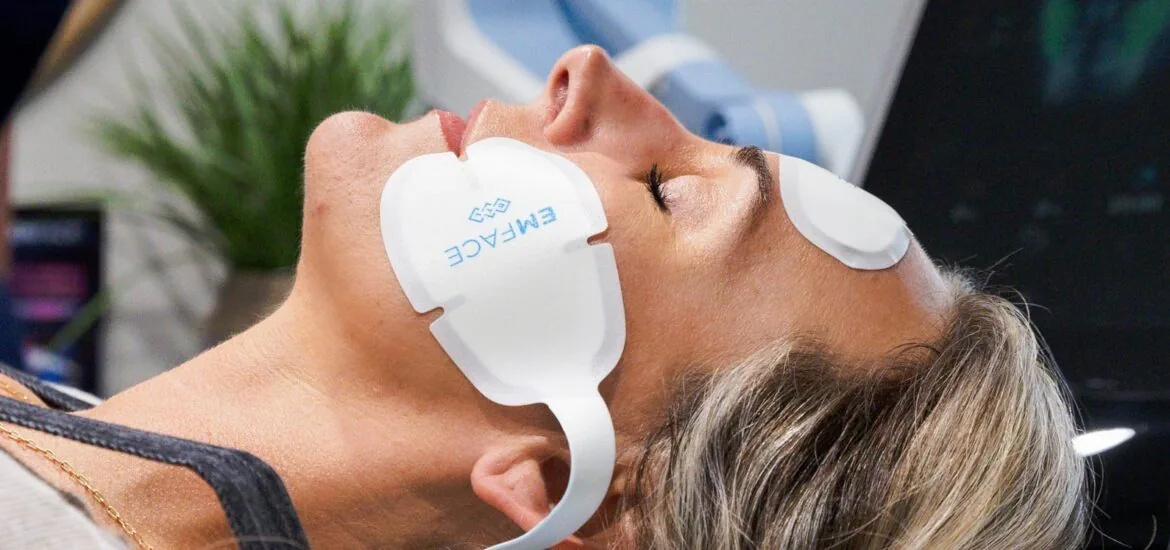
TMJ treatment costs $200 to over $50,000, and where you land inside that range depends almost entirely on how invasive the treatment is. Self-care and a basic appliance sit at the bottom. Custom splints and bite work sit in the middle. Neuromuscular orthotics and jaw surgery sit at the top. Most patients never travel past the lower rungs.
Two things decide your number more than anything else: what is actually causing your symptoms, and whether your insurance classifies the treatment as dental or medical. Below we break down the cost of every treatment level, what drives the price inside each one, how coverage really works for jaw care, and the practical ways to keep the total down.
How Much Does TMJ Treatment Cost?
TMJ treatment costs $200 to over $50,000, which is one of the widest ranges in dentistry. The spread exists because “TMJ treatment” describes six different levels of care rather than one procedure. A patient who needs a night guard and a soft diet and a patient who needs open-joint surgery are both being treated for the same diagnosis.
The ranges below reflect published US provider fees and compiled 2026 dental cost data. They are planning figures for comparison, not our fees.
| Treatment Level | Typical Cost | What It Covers |
|---|---|---|
| Initial assessment | $100 to $500 | Consultation, clinical exam and any diagnostic imaging |
| Self-care and conservative measures | Free to $200 | Soft diet, heat and cold, habit changes, over-the-counter anti-inflammatories |
| Custom oral appliances | $300 to $1,200 | Custom night guards and stabilization splints made from impressions of your bite |
| Bite correction | $50 to $1,500 | Occlusal adjustment, from a single tooth up to extensive reshaping |
| Therapies and injections | $400 to $2,000 | Physical therapy courses and injection-based muscle treatments, delivered medically |
| Neuromuscular orthotics | $1,500 to $6,000 | Jaw-repositioning appliances and full alignment packages |
| Surgical procedures | $3,000 to $50,000+ | Arthroscopy through to open-joint surgery and joint replacement |
Scale explains why this question gets asked so often. A joint investigation by KFF Health News and CBS News reported that temporomandibular disorders are believed to affect as many as 33 million Americans, and that treatment costs frequently land entirely out of pocket, ranging from a few hundred dollars to tens of thousands.
How Much Does a TMJ Consultation Cost?
A TMJ consultation costs $100 to $500, depending on whether imaging is included. The clinical portion covers a review of your symptoms and history, hands-on assessment of how both joints move, measurement of your maximum opening, palpation of the chewing muscles for tender points, and evaluation of how your teeth meet.
Skipping this step is the most expensive decision available. Accurate diagnosis is what prevents money going toward a treatment aimed at the wrong problem, and a thorough dental exam also rules out dental causes that mimic jaw joint pain, such as a cracked tooth or an infected nerve.
Imaging is where the range widens. Where the findings point at the joint structure rather than the muscles, dental imaging shows the bony surfaces and adds to the consultation fee. Muscle-dominant cases often need none at all.
How Much Does a Night Guard or Occlusal Splint Cost?
A night guard or occlusal splint costs $300 to $1,200 from a dentist, and the price depends on which device you are actually getting. Three products get called the same thing, which is the root of most confusion about this number.
A protective night guard is a hard acrylic barrier that stops grinding from wearing down enamel. Dentist-made versions run $300 to $800. It guards the teeth and does not reposition anything. A stabilization splint is a step up, calibrated to hold the jaw in a position where the muscles can release rather than brace, and runs $600 to $1,200. Hard-soft laminate splints, which combine a cushioned inner surface with a rigid outer shell, run $800 to $1,500. Neuromuscular orthotics, which actively reposition the jaw, start around $3,000.
Appliances are the level most patients actually reach, which makes them the practical answer to the cost question. Conservative TMJ treatment built around a properly made appliance resolves or substantially improves a large share of cases without anything further being spent.
Is a Custom Splint Worth It Compared to a Drugstore Guard?
Yes, a custom splint is worth it compared to a drugstore guard, and the math favors it within a couple of years. Boil-and-bite guards from a pharmacy cost $15 to $50. Custom guards from an online dental lab run roughly $95 to $235. Dentist-made devices start at $300.
Lifespan closes most of that gap. A custom guard lasts three to five years with daily wear, while heavy grinders may need replacement every 18 to 24 months. A drugstore guard replaced every few months adds up faster than the sticker price suggests, and it does nothing about jaw position.
The clinical difference matters more than the arithmetic. A boil-and-bite guard is uniform thickness and takes no account of how your particular jaw closes, which occasionally worsens symptoms by introducing new uneven contacts. Our custom mouthguards start from impressions of your actual bite, so the appliance supports the jaw where that jaw needs support.
How Much Does Bite Adjustment Cost?
Bite adjustment costs $50 for a minor single-tooth reshaping and up to $1,500 for extensive work across the arch. Occlusal adjustment, sometimes called equilibration, involves carefully reshaping the biting surfaces so the teeth meet evenly and the jaw muscles stop working overtime to find a comfortable position.
Where misalignment is the driver rather than a bad night of grinding, orthodontic correction becomes the alternative. Aligning the teeth with Invisalign addresses the cause instead of managing the load, though it belongs to a different price band and a longer timeline. Dr. Berger completed postgraduate training in occlusion, the study of how teeth contact each other, which is the discipline underneath both approaches.
Why Is TMJ Treatment So Expensive?
TMJ treatment is expensive because nearly every part of it is custom-built for one person and because insurance frequently pays for none of it. Neither factor applies to a routine filling, which is why patients find the pricing so hard to predict.
The specific drivers behind any TMJ quote include:
- The underlying cause. Muscle-driven pain from clenching usually responds to an appliance and habit changes. An internal joint problem or structural defect requires more complex and more expensive care.
- Diagnostic depth. Straightforward muscle cases need an exam. Joint cases need imaging, sometimes more than one kind.
- Appliance type. A protective guard, a stabilization splint and a repositioning orthotic differ by a factor of ten.
- Lab work. Impressions, fabrication and the follow-up adjustments that calibrate the fit all sit inside the appliance fee.
- Treatment duration. Longer courses mean more appointments, more adjustments and more monitoring.
- Number of therapies combined. Appliance plus bite work plus muscle therapy costs more than any one alone.
- Coverage classification. The largest single variable, and the one patients control least.
Is TMJ a Dental or Medical Issue?
TMJ is both a dental and a medical issue, which is precisely the problem. The jaw joint is a musculoskeletal structure, putting it in medical territory, and it is operated by the teeth and treated with dental appliances, putting it in dental territory. Insurance has never resolved this cleanly.
The National Academies of Sciences, Engineering and Medicine examined this in its 2020 study of temporomandibular disorders and described patients as caught in a medical-dental divide that both obstructs care and raises its cost. The study gave dental splints as the clearest example: some dental insurers treat them as medical care, some medical insurers treat them as dental care, and the result is a device covered by neither.
That same study raised a more troubling pattern. Where coverage does exist, it tends to exclude low-risk effective treatments while covering higher-risk options, which means patients can end up receiving the care that reimburses best rather than the care that works best. The National Institutes of Health recommends the most conservative and reversible treatment available, so coverage rules and clinical guidance can point in opposite directions.
None of this is a reason to avoid treatment. It is a reason to understand your own policy before you start, and to ask specific questions rather than general ones.
Is TMJ Ever Covered by Insurance?
Yes, TMJ is sometimes covered by insurance, though coverage is inconsistent and rarely complete. Some plans cover the examination and imaging. Some cover a custom appliance. Some cover neither and explicitly exclude temporomandibular disorders altogether.
What to check on your own policy before treatment starts:
- Whether the plan contains a TMJ or TMD exclusion, which many do in plain language
- Whether occlusal guards are classified as preventive, basic or major services
- Your annual maximum and how much of it remains this year
- Any waiting period on major services
- Frequency limits, meaning how often a new appliance is covered
- Whether a documented diagnosis is required before anything is reimbursed
- Whether your medical plan carries a separate TMJ benefit
One detail saves a great deal of confusion: ask about codes rather than descriptions. Occlusal guards bill under CDT codes D9944, D9945 and D9946, while appliance therapy specifically for a temporomandibular disorder bills under D7880. Carriers classify those codes inconsistently, so quoting the code gets a far more reliable answer than asking whether “night guards” are covered.
Will Insurance Cover a Night Guard for TMJ?
Insurance will often cover part of a night guard for TMJ, typically around 50% of the allowed amount after your deductible. Coverage usually depends on a dentist documenting the diagnosis, and plans commonly apply a frequency cap of one appliance every one to five years.
Partial coverage is less generous than it sounds. Between the deductible, the allowed-amount rule, the frequency limit and the shared annual maximum, a covered dentist-made guard still commonly leaves $150 to $400 out of pocket. Plans that classify appliances as major services rather than basic ones reimburse at the lowest tier, and discount plans frequently offer nothing at all toward them.
What Insurance Covers TMJ Treatment?
The insurance that covers TMJ treatment varies by plan type rather than by carrier. Dental PPO plans most often cover the exam, imaging and part of a custom appliance, subject to the annual maximum. Medical plans sometimes cover physical therapy, prescription medications and, in some policies, surgical procedures, since those fall on the medical side of the divide.
Dental HMO and discount plans generally offer the least for jaw care. Many policies on both sides contain explicit TMJ exclusions, written in as a category rather than decided case by case.
The practical approach is to check both policies rather than one. A treatment excluded by your dental plan is occasionally covered by your medical plan, and the reverse happens just as often.
How Do You Get TMJ Covered by Medicare?
Getting TMJ covered by Medicare is difficult, because traditional Medicare excludes routine dental care including oral appliances. Medical procedures connected to a documented medical diagnosis are sometimes covered under Part B, which can include certain surgical interventions, though appliance therapy generally is not.
Medicare Advantage plans are the more realistic route. Many add supplemental dental benefits that may include part of an appliance, with amounts varying widely from plan to plan. Anyone relying on Medicare should verify benefits with the plan directly before treatment rather than assuming either way.
Is It Better to Go to a Doctor or Dentist for TMJ?
It is better to start with a dentist for TMJ in most cases, because the first several levels of treatment are dental and a dentist can rule out tooth-related causes at the same visit. Jaw pain that turns out to be a cracked tooth costs far less to fix than any appliance, and only a dental exam finds it.
Billing follows that choice. Care delivered in a dental office bills to dental insurance, care delivered medically bills to medical insurance, and which door you walk through affects both the coverage and the paperwork. Patients who have already exhausted a dental annual maximum sometimes do better starting on the medical side for that reason alone.
Orofacial pain specialists occupy a middle ground and take a conservative approach, though access is limited. The American Board of Orofacial Pain’s database lists fewer than 300 certified specialists nationally, with at least 20 states having none at all, so for most people a general dentist experienced in jaw care is the realistic first stop.
Is Fixing TMJ Expensive?
Fixing TMJ is usually not expensive, because the large majority of patients are treated successfully at the lower levels of the ladder. The frightening numbers in the table above belong to a small minority of cases with structural joint problems.
The gap between the two paths is stark. The dean of the University of Kentucky’s College of Dentistry has framed it as roughly $1,000 spent on conservative treatment against $15,000 to $30,000 for surgery, and argued that insurers would save money by covering the former. For most people the realistic total is a consultation plus an appliance, which lands somewhere between $400 and $1,700 all in.
Patients we see in Sonora generally find their costs cluster at the lower end of the published national tiers rather than the upper. Conservative care is both the recommended clinical path and the inexpensive one, which is a rare alignment in healthcare.
Does TMJ Treatment Cost More If You Wait?
Yes, TMJ treatment costs more if you wait, because symptoms that start as muscle strain can progress into joint changes and tooth damage that require more expensive care. Early cases respond to habit changes and an appliance. Late cases often need those plus restorative work on the teeth.
Tooth damage is the cost most patients never see coming. Years of unchecked grinding flatten the biting surfaces, crack fillings and fracture teeth, and none of that reverses. Rebuilding worn surfaces with dental crowns restores function at a price well above what an appliance would have cost, and each damaged tooth is billed separately.
Treatment duration climbs too. A case caught while symptoms are intermittent typically needs fewer appointments and fewer adjustments than one that has been running for years, and appointment count is a direct input into the total. A good share of the long-standing jaw cases we see across Sonora and Tuolumne County started as something a soft diet would have settled.
What Is the Cheapest Way to Treat TMJ?
The cheapest way to treat TMJ is to work the free measures hard before spending anything, then buy only the level of care your diagnosis actually calls for. Self-care costs nothing and resolves a meaningful share of mild cases on its own.
In order of cost, the sequence looks like this:
- Switch to soft foods, stop chewing gum, and take smaller bites for two to three weeks.
- Apply ice for sharp recent pain and moist heat for a dull ongoing ache, 15 to 20 minutes at a time.
- Catch the daytime habits: clenching at a screen, nail biting, leaning on your chin, phone against the shoulder.
- Use over-the-counter anti-inflammatories as directed for short periods.
- Book the consultation. Knowing whether the problem is muscular or structural prevents spending on the wrong tier.
- Buy the appliance the diagnosis calls for rather than the most advanced one available.
- Use pre-tax dollars. Occlusal guards qualify for HSA and FSA funds when used to treat grinding, which reduces the real cost by your tax rate.
- Split treatment across two benefit years where the plan year is nearly exhausted.
For anything falling outside coverage, we offer interest-free in-office payment options along with a discount for payment made before treatment, and our front desk handles benefit verification so nobody is guessing at the balance.
How Do You Get an Accurate TMJ Treatment Estimate?
You get an accurate TMJ treatment estimate from an exam that identifies the cause, followed by a written plan with each item priced separately. National ranges tell you the shape of the market. They cannot tell you which tier your own jaw belongs in.
A useful written estimate separates the consultation and imaging, names the specific appliance and what it includes, states how many adjustment appointments are covered by the fee, lists any bite work as its own line, and gives both the full treatment figure and the expected out-of-pocket amount after benefits. Ask for both numbers rather than one.
Most people find that jaw pain relief costs considerably less than the headline ranges suggest, because most people never need the upper tiers. If you are deciding where to start, we have written about what to look for in a TMJ dentist.
Frequently Asked Questions
How Much Does TMJ Treatment Cost Without Insurance?
TMJ treatment without insurance costs roughly $400 to $1,700 for the common path of a consultation plus a custom appliance. Adding bite adjustment raises that by $50 to $1,500 depending on how much work is needed. Surgical cases run into the tens of thousands, though they represent a small minority of patients.
Can You Use HSA or FSA Funds for TMJ Treatment?
Yes, you can use HSA or FSA funds for TMJ treatment. Occlusal guards qualify under IRS guidance when used to treat grinding, regardless of where they are purchased, and consultations and imaging generally qualify as medical expenses as well. Paying with pre-tax dollars reduces the effective cost by your marginal tax rate.
How Long Does a Custom Splint Last?
A custom splint lasts three to five years with daily wear and proper cleaning. Heavy grinders wear through them faster, sometimes needing replacement every 18 to 24 months. Cleaning with a soft brush and a nonabrasive cleanser rather than toothpaste extends the life considerably, and hot water permanently warps the acrylic.
Is Botox for TMJ Covered by Insurance?
Botox for TMJ is covered by insurance only sometimes. Many carriers classify it as cosmetic and exclude it, while a smaller number cover it when a physician documents medical necessity for muscle-related jaw pain. It is delivered medically rather than in a general dental office, so it bills to medical insurance where any coverage exists.
What Does a TMJ Treatment Plan Include?
A TMJ treatment plan includes the diagnosis, the recommended treatment level, the specific appliance if one is indicated, the number of follow-up adjustments, and any bite work needed. A good plan prices each element separately rather than quoting a single bundled figure, since that is the only way to compare it against another office.
Does a Night Guard Need Replacing?
Yes, a night guard needs replacing every few years as the acrylic wears thin, cracks or loses its fit. Teeth shift slightly over time and heavy grinding accelerates the wear, so an appliance that no longer seats snugly stops protecting the teeth underneath it. Insurance frequency caps of one every one to five years reflect roughly this lifespan.
The Bottom Line
TMJ treatment spans $200 to over $50,000 on paper, but that range describes a ladder rather than a price. Most people climb no higher than a consultation and a custom appliance, which puts the realistic total between $400 and $1,700. The cases that reach five figures involve structural joint problems, and they are the exception rather than the pattern.
Coverage is the variable that frustrates patients most, and it is worth sorting out before treatment rather than after. Jaw care sits awkwardly between dental and medical insurance, appliances get classified differently by different carriers, and the same treatment can be fully covered on one policy and excluded outright on another. Asking about the specific billing codes, checking both policies, and using pre-tax dollars where they apply are the three moves that reliably lower the real number.
If you are trying to work out what your own jaw would actually cost to treat, we are glad to examine it and give you a written plan with each item priced. You can find us at Jeff Berger Dentistry on Mono Way, and you are welcome to get in touch whenever it suits you.


