


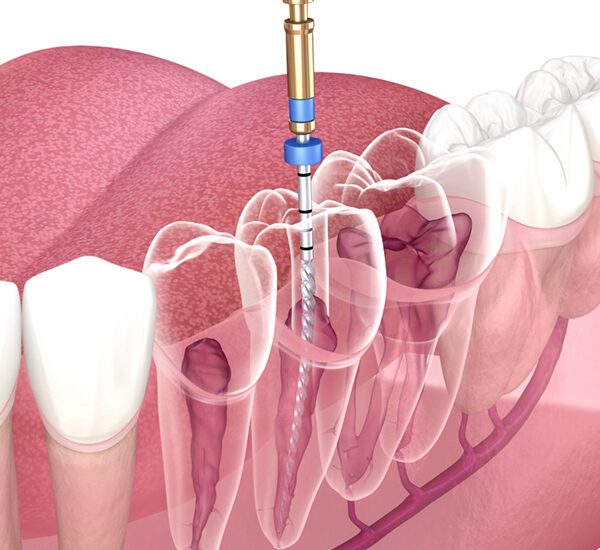
A root canal is a dental procedure that removes infected or damaged soft tissue, called pulp, from the inside of a tooth to save it from extraction. The dentist cleans and disinfects the hollow canals inside the tooth’s root, fills them with a rubber-like material called gutta-percha, and seals the tooth with a filling or crown. According to the American Association of Endodontists (AAE), more than 15 million root canals are performed in the United States every year, making it one of the most common procedures in dentistry. You may need a root canal when bacteria reach the pulp through a deep cavity, a crack, or an old failing restoration, and the resulting infection causes pain, swelling, or damage to the surrounding bone. This guide covers the signs, the step-by-step procedure, what recovery feels like, and how to keep your treated tooth healthy for years.
What Is a Root Canal and How Does It Save Your Tooth?
A root canal saves your tooth by removing the source of infection while leaving the tooth’s outer structure intact. Every tooth has three layers. The outermost layer is enamel, the hardest substance in the human body. Beneath the enamel sits dentin, a dense layer that makes up most of the tooth’s structure. At the center of the tooth lies the pulp, a soft tissue that contains nerves, blood vessels, and connective tissue. Pulp plays a critical role during tooth development by helping the root grow, but a fully developed adult tooth can survive without it because the surrounding bone and ligament tissues continue to supply nourishment.
When bacteria penetrate through the enamel and dentin and reach the pulp, infection sets in. Infected pulp swells inside the rigid walls of the tooth, and that pressure on the nerve is what produces the intense pain many patients feel. A root canal treatment eliminates the bacteria, removes the damaged pulp, and seals the space so the infection cannot return. The tooth stays in your jaw, continues to function for chewing and biting, and looks no different from any other tooth once the restoration is complete.
What Does Dental Pulp Do?
Dental pulp provides sensation, nourishment, and immune defense to the tooth during its growth and early life. The nerves inside the pulp are what allow you to feel temperature and pressure when you eat or drink. The blood vessels deliver nutrients and oxygen to the living cells within the tooth. The connective tissue supports root development as the tooth forms during childhood and adolescence. Once the tooth is fully developed, the pulp’s primary job is complete. The tooth no longer depends on pulp for survival, which is why removing infected pulp through a root canal does not kill the tooth. The tooth remains functional, anchored in the jawbone by the periodontal ligament, and nourished by the tissues around the root.
What Are the First Signs You Need a Root Canal?
The first signs you need a root canal include severe tooth pain when chewing or biting, lingering sensitivity to hot or cold temperatures, swollen or tender gums near a specific tooth, darkening or graying of the tooth, and a small pimple or bump on the gum near the painful tooth. Not all of these signs appear at the same time, and some infections develop without any obvious symptoms at all. That is why regular dental checkups matter. X-rays taken during a routine exam can reveal an infection at the root tip before you ever feel pain.
The most common warning signs include:
- Severe, persistent pain in a tooth, especially when chewing or applying pressure
- Lingering sensitivity to hot or cold that continues after the food or drink is removed
- Swollen, tender, or darkened gums near the affected tooth
- A pimple-like bump on the gum that may ooze pus, called a dental fistula
- A tooth that appears darker or grayer than the teeth around it
- A loose-feeling tooth caused by bone weakening around the infected root
According to CDC data, 25% of U.S. adults have untreated cavities. Many of those untreated cavities eventually progress deep enough to reach the pulp, at which point a root canal becomes the only way to save the tooth. Catching decay early with routine exams prevents most root canals from ever being needed.
When Is It Too Late to Avoid a Root Canal?
It is too late to avoid a root canal once the bacteria have reached the pulp and caused infection or irreversible inflammation. At that point, the pulp cannot heal on its own. A small cavity in the enamel can be treated with a simple filling. A deeper cavity that reaches the dentin still responds to a filling in many cases. But once decay breaks through the dentin and enters the pulp chamber, the damage is irreversible. The pulp becomes inflamed, infected, or dies, and no filling, antibiotic, or home remedy can reverse that damage. Delaying treatment at this stage allows the infection to spread beyond the root tip and into the jawbone, forming an abscess. Abscesses can cause significant facial swelling, fever, and in rare cases, life-threatening systemic infections that require hospitalization. Seeking emergency dental care as soon as symptoms appear prevents these serious complications.
What Happens During a Root Canal Procedure?
During a root canal procedure, the dentist numbs the tooth and surrounding area, isolates the tooth with a small protective sheet, creates an opening in the crown to access the pulp, removes the infected tissue, cleans and disinfects the canals, fills them with gutta-percha, and seals the tooth. The process follows a precise sequence:
- The dentist administers local anesthesia to numb the tooth and the tissue around it completely. You should feel no pain during the procedure.
- A small rubber dam is placed over the tooth to keep the area dry and free from saliva during treatment.
- The dentist creates a small opening in the top of the tooth to access the pulp chamber and root canals inside.
- Using tiny, flexible instruments, the dentist carefully removes the infected or dead pulp from each canal.
- The empty canals are cleaned, shaped, and disinfected with antimicrobial solutions to eliminate all remaining bacteria.
- The canals are filled with gutta-percha, a biocompatible rubber-like material that seals the space and prevents bacteria from re-entering.
- A temporary filling is placed over the opening to protect the tooth until a permanent restoration is ready.
- At a follow-up visit, a permanent crown is placed over the tooth to restore its full strength, shape, and function.
The entire procedure typically takes 30 to 90 minutes depending on the tooth’s location and the complexity of its root canal system. Molars, which sit at the back of the mouth and have three or four canals, take longer than front teeth, which typically have one canal. Most root canals are completed in a single visit, though some cases require two appointments. Our office uses advanced technology including digital X-rays and precision instruments to make the procedure as efficient and comfortable as possible.
Do They Drill a Hole in Your Tooth for a Root Canal?
Yes, the dentist creates a small access opening in the top of the tooth to reach the pulp chamber and root canals inside. This opening is made with a dental handpiece, the same tool used to prepare a tooth for a standard filling. The opening is only as large as it needs to be to allow the instruments to reach each canal. Once the root canal treatment is complete, the opening is sealed with a filling material and then covered with a permanent crown to protect the tooth from fracture.
How Long Does a Root Canal Take?
A root canal takes 30 to 90 minutes depending on which tooth is being treated and how many root canals it contains. A front tooth with a single canal can be completed in as little as 30 to 45 minutes. A molar with three or four canals may take 60 to 90 minutes. The AAE reports that more than 41,000 root canal procedures are performed every day across the United States, and general dentists and endodontists have refined the process to be as efficient as a routine filling in most cases.
Is Getting a Root Canal Really Painful?
No, getting a root canal is not painful during the procedure because the dentist uses local anesthesia to numb the tooth and surrounding tissue completely. Most patients describe the experience as similar to having a filling placed. You may feel pressure at certain points, but you should not feel sharp pain. A 2025 study published in the Journal of the American Dental Association found that 72.6% of U.S. adults report some level of dental fear, and much of that fear around root canals comes from outdated stories about how the procedure felt decades ago. Modern anesthetics, precision instruments, and refined techniques have made root canal treatment far more comfortable than most patients expect.
For patients with dental anxiety, we offer sedation dentistry options including nitrous oxide, conscious sedation, and the NuCalm relaxation system. These options help anxious patients stay calm and comfortable throughout the procedure. The AAE reports that 89% of patients are satisfied after root canal treatment, and 15% of people who avoid dental care do so because of fears based on misconceptions about procedures like root canals.
Do People Feel Better After a Root Canal?
Yes, most people feel significantly better after a root canal because the procedure removes the infection that was causing the pain. The throbbing, pressure, and sensitivity that brought you to the dentist resolve once the infected pulp is gone. Some mild soreness around the treated tooth is normal for a few days after the procedure, but this discomfort is manageable with over-the-counter pain relievers like ibuprofen or acetaminophen. The relief from the infection-related pain is often immediate and dramatic. Patients frequently tell us they wish they had not waited so long.
How Many Days Rest Is Needed After a Root Canal?
Most patients need zero days of rest after a root canal. The majority of patients return to work, school, or normal activities the same day. Your mouth will be numb for two to four hours after the procedure, and you should avoid eating until the numbness wears off to prevent biting your cheek or tongue. Mild tenderness near the treated tooth may last two to three days, and over-the-counter pain medication handles it effectively. If pain increases or persists beyond a few days, contact your dentist. That could indicate a complication that needs attention.
During the first few days after treatment, stick to soft foods like yogurt, scrambled eggs, mashed potatoes, and smoothies. Avoid chewing directly on the treated tooth until the permanent crown is placed. Brush and floss normally, but be gentle around the treated area. Avoid smoking, which slows healing and increases the risk of complications.
What Happens to a Tooth Years After a Root Canal?
A tooth years after a root canal functions like any other tooth in your mouth, with one important difference: it no longer has living pulp inside, which means it cannot feel temperature changes. The tooth can still develop decay on its outer surfaces, still accumulate plaque, and still be affected by gum disease. Proper brushing, flossing, and regular dental visits protect a root-canal-treated tooth the same way they protect every other tooth. A 2023 study published in Clinical Oral Investigations followed root-canal-treated teeth for up to 37 years and found a cumulative survival rate of 97% at 10 years and 81% at 20 years. Teeth that received a proper crown and consistent follow-up care lasted the longest.
Do You Need a Crown After a Root Canal?
Yes, you almost always need a crown after a root canal, especially on back teeth. The root canal procedure removes pulp tissue from inside the tooth, and over time, a tooth without living pulp becomes more brittle. A dental crown covers the entire visible portion of the tooth and absorbs the forces of chewing, which protects the tooth from cracking or breaking. Front teeth with small access openings may sometimes be restored with a filling alone, but molars and premolars that bear heavy chewing forces almost always require a full crown.
At our Sonora, CA office, we offer same-day crowns using CEREC technology. CEREC allows us to design, mill, and place a custom ceramic crown in a single visit, which means you do not have to wear a temporary crown for weeks while a lab fabricates the permanent one. The crown matches the shape and color of your natural teeth and restores full chewing function immediately.
How Long Do Root Canals Last?
Root canals last for many years, and with proper care, most root-canal-treated teeth last a lifetime. The AAE and the American Dental Association both confirm that a properly performed root canal combined with a well-fitting crown can preserve a tooth indefinitely. The 2023 Clinical Oral Investigations study found endodontic success rates of 93% at 10 years and 81% at 30 years. The most significant factors that shorten the life of a root-canal-treated tooth are deep periodontal pockets around the tooth, the absence of a protective crown, and teeth grinding without a night guard. Patients who maintain regular dental visits, practice good oral hygiene, and protect treated teeth with crowns achieve the best long-term outcomes.
Is a Root Canal Better Than Pulling a Tooth?
Yes, a root canal is better than pulling a tooth in most cases because it preserves the natural tooth, maintains your bite alignment, and avoids the need for a replacement like an implant or bridge. The AAE emphasizes that saving a natural tooth is almost always the preferred option. A natural tooth maintains normal biting force and sensation, keeps adjacent teeth from shifting, and preserves the jawbone in the area. Extracting a tooth creates a gap that can cause neighboring teeth to drift, change your bite, and lead to bone loss in the empty socket.
| Factor | Root Canal + Crown | Extraction + Replacement |
|---|---|---|
| Tooth Preservation | Saves the natural tooth and root | Removes the tooth entirely |
| Bone Preservation | The root keeps the jawbone stimulated and intact | Bone loss begins in the empty socket within weeks |
| Adjacent Teeth | No effect on neighboring teeth | Neighboring teeth can shift into the gap over time |
| Procedure Timeline | Completed in 1-2 visits | Extraction plus implant healing takes 3-6 months |
| Long-Term Cost | Root canal + crown is typically less expensive | Extraction + implant or bridge is typically more expensive |
| Chewing Function | Full natural biting force and sensation | Implant restores function; bridge relies on adjacent teeth for support |
When a tooth is too damaged to save, extraction becomes necessary. In those cases, dental implants offer the closest replacement to a natural tooth because the implant post integrates with the jawbone and prevents bone loss. But whenever a root canal can save the tooth, that is the better path for your long-term oral health.
What Can I Do Instead of a Root Canal?
The only real alternative to a root canal is extraction of the tooth. Once the pulp is infected or dead, no medication, antibiotic, or home remedy can reverse the damage. Antibiotics may temporarily reduce swelling and pain caused by a dental abscess, but they cannot eliminate the infection inside the sealed pulp chamber. The bacteria remain inside the tooth, and the infection returns once the antibiotic course ends. The choice comes down to saving the tooth with a root canal or removing it with an extraction. For the vast majority of patients, saving the natural tooth produces better outcomes for chewing, appearance, bone health, and long-term cost. According to the Global Burden of Disease Study, more than 90% of adults have had at least one cavity, which underscores how common dental decay is and why procedures that save damaged teeth matter so much.
How to Prevent Needing a Root Canal
The best way to prevent needing a root canal is to catch and treat cavities before they reach the pulp. That means brushing twice a day with fluoride toothpaste, flossing once a day, and visiting your dentist every six months for a professional cleaning and exam. Digital X-rays taken during routine checkups reveal cavities while they are still small and treatable with a simple filling. A filling placed early stops decay from progressing deeper into the tooth.
Wearing a mouthguard during sports protects teeth from cracks and fractures that can expose the pulp to bacteria. If you grind your teeth at night, a custom night guard prevents the gradual wear and microscopic cracks that lead to pulp damage over time. Avoiding hard foods like ice, popcorn kernels, and hard candy reduces the risk of sudden tooth fractures. Consistent, proactive dental care is the most effective way to keep your teeth healthy and avoid the need for a root canal.
Frequently Asked Questions
What Is the Difference Between a Dentist and an Endodontist?
The difference between a dentist and an endodontist is the level of specialized training. An endodontist is a dentist who completed two to three additional years of advanced education focused specifically on root canal treatment and procedures involving the interior of the tooth. General dentists perform root canals regularly and handle the majority of cases. Endodontists typically handle more complex cases, such as teeth with unusual anatomy, retreatments, or cases requiring microsurgical techniques. The AAE reports that endodontists perform an average of 25 root canals per week, compared to fewer than two per week for general dentists.
Can a Root Canal Save a Tooth?
Yes, a root canal can save a tooth that would otherwise need to be extracted. The procedure removes the infection while preserving the tooth’s outer structure, root, and position in the jaw. Root canals have a success rate of 90 to 95%, according to the AAE and multiple clinical studies. With a proper crown and consistent dental care, a root-canal-treated tooth can last a lifetime.
How Soon After a Root Canal Can I Eat?
You can eat after a root canal once the local anesthesia wears off, which typically takes two to four hours. Eating while your mouth is still numb increases the risk of accidentally biting your cheek, lip, or tongue. Start with soft foods for the first few days and avoid chewing directly on the treated tooth until the permanent crown is placed.
Do Root Canals Weaken Teeth?
A root canal removes the pulp from inside the tooth, which can make the tooth slightly more brittle over time. That is why a crown is placed over the tooth after the root canal. The crown restores the tooth’s full strength and protects it from cracking under normal chewing forces. A crowned root-canal-treated tooth functions just like a healthy natural tooth.
Is It Normal to Feel Pressure During a Root Canal?
Yes, it is normal to feel pressure during a root canal, but you should not feel sharp pain. The local anesthesia numbs the nerves that transmit pain signals, but pressure receptors in the surrounding bone and ligament can still be active. If you feel anything more than mild pressure, let your dentist know immediately so they can adjust the anesthesia.
The Takeaway
A root canal is one of the most reliable procedures in dentistry. It removes the infection, eliminates the pain, and saves the natural tooth so you can keep chewing, smiling, and living without interruption. More than 15 million Americans go through this procedure every year, and the overwhelming majority walk away satisfied and relieved. The key is not to wait. The earlier an infection is caught, the simpler the treatment and the better the outcome.
At Jeff Berger Dentistry, we perform root canals with the precision, comfort, and care your smile deserves. If you are experiencing tooth pain, sensitivity, or any of the signs described in this guide, call us at 209-532-2915 to schedule an appointment.


