


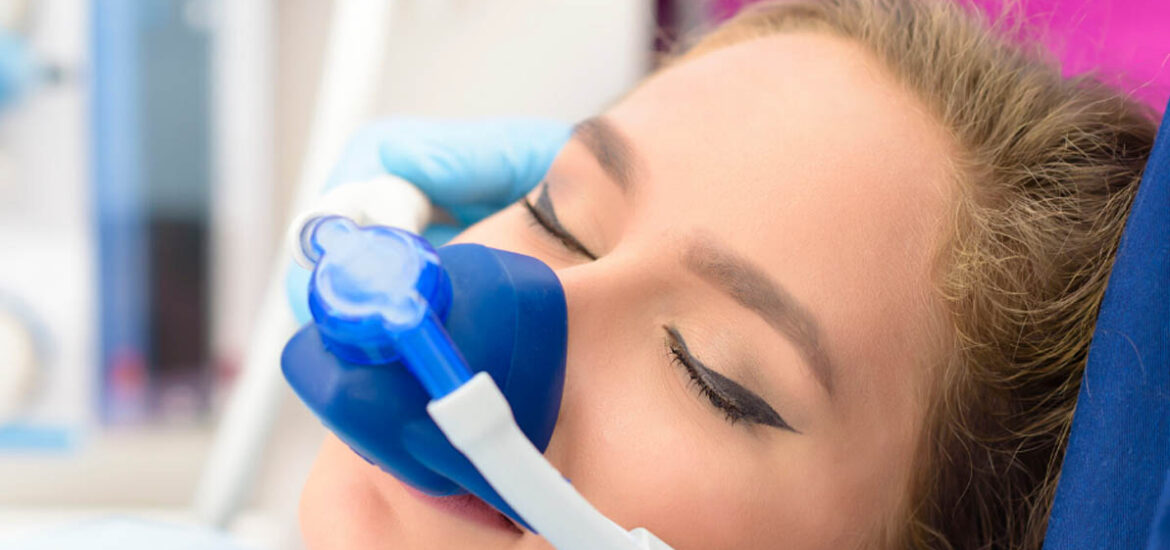
Sedation dentistry uses medication to help you relax and stay comfortable during dental treatment. It ranges from mild relaxation, where you stay fully awake and talking, to complete unconsciousness for major surgery. Local numbing agents are still used alongside sedation to block pain, because the two do separate jobs.
Sedation is most often recommended for people who struggle to get through an ordinary appointment, whether the reason is fear, a sensitive gag reflex, teeth that are hard to numb, or a procedure that runs long. Below we explain each level of sedation, what you actually feel at each one, who benefits most, and how to tell which option fits you.
What Is Sedation Dentistry?
Sedation dentistry is the use of prescription medication to reduce anxiety, discomfort and movement during dental treatment. The medication acts on your nervous system, lowering the stress response that makes a dental chair feel unbearable for some people.
That stress response is the target, not the tooth. Sedation quiets the part of you that dreads the appointment, and it does that whether the visit is a short filling or a long root canal. The depth of that quieting is what separates one sedation option from another.
Depth is measured on a continuum recognized by the American Dental Association, running from minimal sedation through moderate sedation, deep sedation and general anesthesia. Each step down that continuum changes how awake you are, how much you remember, and how long you need before you feel normal again.
What Are the Types of Sedation Dentistry?
The types of sedation dentistry are nitrous oxide, oral conscious sedation, intravenous sedation and general anesthesia. They sit in ascending order of depth, and each one suits a different combination of anxiety level and procedure length. Onset and recovery figures below come from Cleveland Clinic’s sedation guidance and from the American Dental Association’s anesthesia guidelines.
| Sedation Type | How Awake You Are | Onset | Recovery | Can You Drive? |
|---|---|---|---|---|
| Nitrous oxide | Fully awake and talking | 3 to 5 minutes | 15 to 30 minutes | Yes, same day |
| Oral conscious sedation | Drowsy but responsive | About 1 hour | Up to 24 hours | No |
| IV sedation | Deeply relaxed, often no memory | Almost immediate | Up to 24 hours | No |
| General anesthesia | Completely unconscious | Almost immediate | A full day or more | No |
How Does Nitrous Oxide Work at the Dentist?
Nitrous oxide works by flowing through a small mask over your nose, mixing with oxygen, and absorbing into your bloodstream through your lungs. You feel calm and slightly floaty within 3 to 5 minutes, and your dentist adjusts the concentration up or down throughout the appointment.
Adjustability is what makes nitrous oxide, also called laughing gas, the gentlest option available. Pure oxygen flushes it out of your system at the end of the visit, and most people feel completely normal within 15 to 30 minutes. That fast clearance is why nitrous oxide is the one sedation type that lets you drive yourself home.
What Is Oral Conscious Sedation?
Oral conscious sedation is a prescription sedative taken by mouth about an hour before your appointment. You stay conscious and able to respond, but the edge comes off completely, and many people feel drowsy enough to doze.
Drowsiness lingers longer than it does with laughing gas. The medication stays in your system for hours after the appointment ends, which is why you need a ride home and a quiet rest of the day. That deeper, longer effect is what makes oral sedation a strong fit for people whose anxiety runs past what nitrous oxide can settle, and it is one of the forms of dental sedation we use most often.
What Are the Deeper Sedation Options?
The deeper sedation options are intravenous sedation and general anesthesia. IV sedation delivers medication straight into a vein, which lets a trained provider adjust the depth minute by minute, and most patients remember little or nothing afterward.
General anesthesia goes further still, producing complete unconsciousness. It is reserved for major oral surgery and for patients who cannot tolerate treatment any other way, and it is performed in a surgical setting with an anesthesiologist present. Both of these deeper levels require specialized permits and continuous monitoring of heart rate, blood pressure and oxygen saturation.
Does Sedation Dentistry Put You to Sleep?
Sedation dentistry does not put you to sleep in most cases. The large majority of dental sedation keeps you awake, breathing on your own, and able to answer questions. This is why the common levels are called conscious sedation, and why the phrase “twilight sleep” describes the feeling better than actual sleep does.
Actual sleep only happens at the deepest end of the continuum. Under nitrous oxide you stay fully alert. Under oral sedation you may drift and doze, and your dentist will simply wake you if they need you to open wider or turn your head.
Will I Remember the Procedure?
You will remember the procedure with nitrous oxide, and you may remember very little of it with oral sedation. Many sedatives used in dentistry produce a mild amnesic effect, meaning the memory of the appointment fades even though you were conscious the whole time.
That fading is often the part patients value most. A person who has spent years dreading the sound of a handpiece walks out with no sharp memory of it, which makes the next appointment easier to schedule.
Do You Still Get Numbing Shots With Sedation?
Yes, you still get numbing shots with sedation. Sedation manages anxiety and awareness, and local anesthetic blocks pain, so nearly every sedation appointment uses both. Your dentist gives the sedation first, waits until you are relaxed, then places the local anesthetic while you are already calm.
Placing the anesthetic second is deliberate. People who fear needles often fear that exact moment, and a relaxed patient barely registers it. The anesthetic then does the work sedation cannot, which is switching off sensation at the nerve.
What Is the Difference Between Sedation and Local Anesthetic?
The difference between sedation and local anesthetic is where each one acts. Sedation acts on your central nervous system and changes how you feel emotionally. Local anesthetic acts on a specific nerve and changes what that area can sense.
Sensation travels through the nerve inside and around the tooth. That nerve is what a numbing injection temporarily silences, which is why a patient under sedation alone would still feel pressure and pain during a filling or a root canal treatment. Combining the two gives you a calm mind and a quiet nerve at the same time.
Who Needs Sedation Dentistry?
Sedation dentistry is recommended for people who cannot get through a normal dental appointment comfortably. That group is far larger than most people assume. A systematic review published in the Journal of Dentistry estimates that dental fear and anxiety affects 15.3 percent of adults globally, with 12.4 percent reporting high fear and 3.3 percent meeting the threshold for severe dental phobia.
Severe phobia is the extreme end. A 2024 census-matched survey of 1,003 American adults published in the Journal of the American Dental Association found 72.6 percent reporting some level of dental fear, with 26.8 percent describing that fear as severe. You might benefit from sedation if you recognize yourself in any of these:
- Severe dental anxiety or phobia. Research in the Journal of Dental Hygiene reports that more than 20 percent of dentally anxious patients do not see a dentist regularly, and 9 to 15 percent avoid care entirely.
- A sensitive gag reflex. Roughly 8.2 percent of dental patients experience significant gag reflex discomfort, according to research published in Frontiers in Oral Health, and up to 20 percent have skipped a procedure because of it.
- Trouble getting numb. Some people metabolize local anesthetic quickly or have anatomy that makes a standard injection less effective.
- Very sensitive teeth or a low pain threshold. Discomfort that others tolerate easily can make ordinary treatment genuinely difficult.
- Difficulty sitting still. Physical, behavioral or cognitive needs can make holding one position for an hour hard or impossible.
- Fear of needles. Sedation given before the injection removes the trigger from the equation.
- Long or involved appointments. Multiple extractions, implant placement, or several restorations in one sitting stretch anyone’s tolerance.
Women and younger adults report dental anxiety at higher rates than the general population, according to the same Journal of Dentistry review. Anxiety level is only half the picture though. The procedure itself carries just as much weight in the recommendation.
What Conditions Might Require Sedation Dentistry?
The conditions that might require sedation dentistry are dental phobia, a strong gag reflex, difficulty achieving numbness, movement disorders, special healthcare needs, and any treatment plan that demands long chair time. A short filling and a full afternoon of restorative work place very different demands on a patient.
Chair time is the practical variable. A person can white-knuckle fifteen minutes and still be miserable, and the same person can move through two hours calmly with the right support. That gap is where sedation earns its place.
Can You Get Sedation for a Routine Cleaning?
Yes, you can get sedation for a routine cleaning. Nitrous oxide is commonly used during hygiene visits for patients whose anxiety or gag reflex makes even routine cleanings difficult to sit through.
Sitting through a cleaning matters more than it sounds. Preventive visits are what stop small problems from turning into large ones, and a patient who skips cleanings for years usually arrives needing far more than a cleaning.
What Sedation Is Used for Dental Implants?
The sedation used for dental implants depends on how many implants are placed and how anxious the patient is. Single implant placement is frequently done with local anesthetic plus nitrous oxide or oral sedation, while full-arch cases involving multiple sites are often handled under deeper sedation.
Deeper sedation suits longer surgeries because tolerance, not pain control, is usually the limiting factor. Patients considering dental implants should raise sedation at the planning appointment, since the sedation choice influences how the surgical visits get scheduled.
Is Sedation Dentistry Safe?
Yes, sedation dentistry is safe when it is provided by a trained dentist who reviews your health history first. Safety comes from matching the sedation level to the patient, then monitoring that patient throughout the appointment. The American Dental Association sets specific training requirements for each level, and those requirements climb steeply as depth increases.
Climbing requirements are worth knowing about. ADA guidelines call for 24 hours of classroom instruction plus supervised experience with at least 10 patients before a dentist provides oral moderate sedation, and 60 hours of instruction plus at least 20 supervised infusions for intravenous moderate sedation. Deep sedation and general anesthesia require a minimum of three trained people in the room.
Three people in the room reflects how closely deeper sedation has to be watched. Before any sedation appointment, Dr. Berger reviews your medical history, your current medications and any past reactions to sedatives, because certain medications and health conditions change which options are appropriate.
What Is the Safest Sedation for Dental Work?
The safest sedation for dental work is nitrous oxide, which has the lightest effect, the fastest reversal and the longest track record in dentistry. It leaves your system within half an hour of the mask coming off, and it does not require a driver or a recovery day.
Recovery requirements rise with depth, and so does the monitoring that comes with it. The safest choice for any individual is the lightest level that actually lets them get through the appointment, which is the principle behind every recommendation we make about sedation options.
How Do You Prepare for Sedation Dentistry?
You prepare for sedation dentistry by following your dentist’s fasting, medication and transportation instructions exactly. Preparation is short but it determines whether the appointment goes ahead as planned. Follow these steps in order:
- Give your dentist a complete list of every medication and supplement you take, since some interact with sedatives.
- Ask how long to fast beforehand, because food and drink restrictions differ by sedation type.
- Arrange a driver in advance for any option other than nitrous oxide.
- Wear loose, comfortable clothing with sleeves that move easily above the elbow.
- Take the prescribed sedative at the exact time you were told, if oral sedation is planned.
- Clear the rest of your day so you can rest at home afterward.
- Arrive early enough to settle in before the medication takes effect.
Settling in early helps more than people expect. Anxious patients often find that a look around the treatment area before anything starts takes some of the fear out of the room, which is part of why we offer an office tour to anyone who asks for one.
How Long Does Dental Sedation Take to Wear Off?
Dental sedation takes 15 to 30 minutes to wear off after nitrous oxide, and up to 24 hours after oral or IV sedation. Nitrous oxide clears through your lungs as soon as you breathe pure oxygen, which is why it carries no driving restriction.
Driving restrictions apply to everything deeper. Oral and intravenous sedatives leave the body gradually through the liver and kidneys, so the full 24 hours applies even when you feel fine after a few hours. Plan on a quiet evening, skip anything that requires sharp judgment, and call your dentist if grogginess is still hanging on the next day.
Is Sedation Dentistry Worth It?
Yes, sedation dentistry is worth it for anyone whose fear has been keeping them out of the dental chair. The value is not the comfort of one appointment, it is the treatment that finally gets completed. Avoided dental care does not stay avoided forever, it simply resurfaces later as something bigger.
Bigger problems show up in the national numbers. The Agency for Healthcare Research and Quality recorded more than 2 million dental-related emergency department visits in 2018, a rate of 615.5 visits per 100,000 people. A University of California San Francisco analysis of 424 million emergency visits identified dental conditions among the leading causes of avoidable emergency department trips.
Avoidable is the operative word, since almost all of those cases began as something routine. Sedation also lets us combine treatment into fewer, longer appointments for patients who can tolerate the chair time, which means less disruption to your schedule and fewer trips back. It is a far better path than waiting until a small cavity becomes a dental emergency.
What Sedation Options We Offer
We offer nitrous oxide, conscious sedation and the NuCalm relaxation system at our Sonora office. Each one addresses a different level of need, and we help you pick based on how you actually feel about treatment rather than on which procedure is scheduled.
Nitrous oxide handles mild nerves. It flows throughout your treatment at whatever level keeps you comfortable, and it leaves your system before you walk out the door.
Conscious sedation goes deeper for patients whose anxiety needs more than laughing gas can settle. You stay relaxed through the entire appointment and can still communicate with us, without feeling discomfort from the treatment itself.
NuCalm is our drug-free option, a relaxation system that eases you toward the first stages of sleep and lets you leave feeling refreshed rather than groggy. Patients who want deep calm without medication often choose it, and it is one of the reasons our approach to sedation dentistry works for people who have tried and quit other offices.
Frequently Asked Questions
Can Children Have Sedation Dentistry?
Yes, children can have sedation dentistry, and nitrous oxide is the option used most often for young patients. Children metabolize sedatives differently than adults, so dosing is calculated by weight and monitored closely. A child’s dentist will explain the recovery signs to watch for, which typically resolve within 48 hours.
Can You Have Sedation Dentistry While Pregnant?
Sedation dentistry is usually postponed during pregnancy. Cleveland Clinic advises keeping up regular checkups while pregnant but waiting until after delivery for procedures involving sedation, since some sedatives can affect fetal development. Tell your dentist early, because urgent treatment is still handled safely with local anesthetic alone.
How Long Does Laughing Gas Take to Wear Off?
Laughing gas takes 15 to 30 minutes to wear off completely. Your dentist gives you pure oxygen through the same mask at the end of treatment, which flushes the nitrous oxide out of your bloodstream quickly. You can drive yourself home and return to your normal day right after.
Can You Eat Before Dental Sedation?
Whether you can eat before dental sedation depends on which type you are receiving. Nitrous oxide usually allows a light meal, while oral and intravenous sedation typically require several hours of fasting. Your dentist gives you the exact window during your pre-appointment instructions, and following it prevents nausea during treatment.
Does Sedation Dentistry Hurt?
Sedation dentistry does not hurt. Nitrous oxide is inhaled through a mask with nothing sharp involved, and oral sedation is swallowed as a pill. Pain during the actual treatment is handled by local anesthetic placed after the sedation has already taken effect, so most patients never notice the injection.
How Do You Know Which Sedation Level Is Right for You?
You know which sedation level is right for you after a conversation about your anxiety, your medical history and the treatment being planned. The general rule is to choose the lightest option that lets you complete the appointment comfortably. Many patients start with nitrous oxide and move up only if they find they need more.
The Bottom Line
Sedation dentistry uses medication to keep you relaxed during treatment, and it runs from nitrous oxide that clears in half an hour to general anesthesia that produces full unconsciousness in a surgical setting. Numbing is still used alongside it, because sedation calms your nervous system while local anesthetic blocks the nerve. The people who benefit most are those with real dental fear, a sensitive gag reflex, teeth that resist numbing, difficulty sitting still, or a treatment plan that needs long chair time.
If fear has kept you out of a dental chair for years, you are in a very large group, and there is a comfortable way back in. We treat patients across Tuolumne County who walked in expecting the worst and left wondering why they waited so long. Call Jeff Berger Dentistry to talk through your options, or schedule a visit whenever you are ready.


