


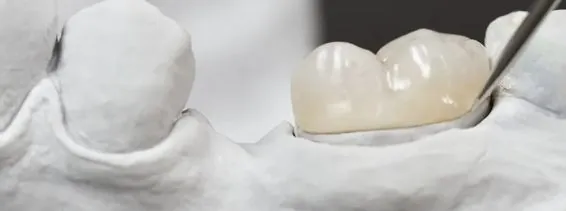
Most dental crowns last between 10 and 15 years, according to the American Dental Association. With proper oral hygiene and regular dental visits, many crowns last well beyond that. Gold and zirconia crowns can remain functional for 20 years or more. The lifespan of your crown depends on the material it is made from, the location of the tooth, your bite habits, and how well you care for it. This article covers what determines crown longevity, the signs that a crown needs to be replaced, and how to get the most years out of your restoration. We provide durable, long-lasting dental crowns and bridges here in Sonora for patients across Tuolumne County.
How Long Dental Crowns Last by Material
The material your crown is made from is the single biggest factor in how long it will last. Not all crowns are created equal. A study by Pjetursson et al., published in Clinical Oral Implants Research, found that ceramic crowns have a five-year survival rate of 93% to 98% and a 10-year survival rate of 82% to 91%. Metal-based crowns consistently perform at the top of the range.
Gold and Metal Alloy Crowns have the longest track record. They rarely chip or fracture, and they produce very little wear on opposing teeth. Gold crown longevity ranges from 15 to 30 years in clinical studies. A 2015 literature review found that gold crowns have a 95% survival rate at 10 years. They are best for back teeth where appearance is less of a concern.
Zirconia Crowns are the strongest ceramic option available today. A large systematic review found that zirconia single crowns had a 5-year survival rate of 98.3%. A separate study published in the Journal of Prosthodontics showed survival rates above 95% after 10 years of clinical service. Zirconia crowns can last 15 to 25 years and work well on both front and back teeth.
We offer zirconia and other ceramic crown options here in Sonora. Dr. Jeff Berger and the entire team use advanced dental technology including CEREC to mill precise, high-quality restorations.
Porcelain-Fused-to-Metal (PFM) Crowns combine a metal base with a porcelain outer layer. They offer a good balance of strength and appearance. A retrospective survey of 2,182 posterior crowns published in Quintessence International found a 99.2% survival rate for PFZ crowns and 99.3% for PFM crowns over 7.4 years. PFM crowns typically last 10 to 20 years. The most common issue is chipping of the porcelain layer.
All-Ceramic (Porcelain) Crowns provide the most natural look and are popular for front teeth. They typically last 10 to 15 years. Research shows all-ceramic crowns have a 75% to 80% survival rate at 10 years, which is lower than metal-based options. Newer lithium disilicate (e.max) crowns perform better, lasting 10 to 15 years with improved fracture resistance.
Resin Crowns are the least durable option. They are mostly used as temporary crowns. Their average lifespan is 3 to 5 years.
If you are not sure which material is right for your situation, we can walk you through the options during a consultation. We also offer CEREC same-day crowns made from high-strength ceramic for patients who want a quality restoration in a single appointment.
What Affects How Long a Crown Lasts
Material is important, but several other factors play a major role in how many years you get from your crown.
Oral Hygiene: Plaque buildup around the base of a crown leads to decay at the margins. This is one of the top reasons crowns fail. Brushing twice daily, flossing around the crown, and using an antibacterial mouthwash all help protect the seal between the crown and the tooth.
Teeth Grinding (Bruxism): Grinding puts enormous stress on crowns, especially on molars. A 2022 retrospective study found that bruxism significantly increased the risk of crown failure. If you grind your teeth, a custom nightguard can protect your crowns and extend their life by years.
Root Canal Status: Crowns placed on teeth that have had root canals tend to fail sooner. A Dutch study of 3,404 crowns published in PubMed found that endodontically treated teeth had a hazard ratio of 1.89 for survival, meaning crowns on root canal teeth fail nearly twice as often as crowns on vital teeth. This makes it especially important to get a well-fitting crown after a root canal.
Tooth Location: Crowns on molars take more force than crowns on front teeth. A ScienceDirect study identified molar placement as a risk factor for complications, with a hazard ratio of 6.01 compared to premolars.
Crown Fit and Placement: A crown that does not fit precisely creates microscopic gaps where bacteria can enter. The skill of the dentist and the quality of the impression or digital scan both matter. Dr. Berger uses digital scanning and CEREC CAD/CAM technology to achieve accurate, consistent results for patients in Sonora, Jamestown, and Columbia.
How Do You Know When a Crown Needs Replaced?
You know a crown needs replaced when you notice signs of wear, damage, or discomfort that were not there before. Crowns do not last forever, and catching problems early can save the underlying tooth.
Pain or sensitivity around a crowned tooth, especially when biting down or drinking hot or cold liquids, can signal decay underneath or a failing seal. A clinical study of 124 adults found that over 60% of patients experience dentin sensitivity after initial crown placement, but this should go away within days. If sensitivity returns months or years later, something has changed.
A visible crack or chip in the crown weakens its ability to protect the tooth. Even a small chip can allow bacteria to reach the tooth underneath.
A loose or rocking crown means the cement bond has broken down. This is more common with older crowns. If your crown feels loose, call us at 209-532-2915 right away so we can re-cement or replace it before decay sets in.
Dark discoloration near the gum line can indicate decay at the crown margin. This is easier to spot with porcelain crowns than with metal ones. Regular X-rays help detect decay that is not visible on the surface.
Gum recession around the crown can expose the edge where the crown meets the tooth. This creates a vulnerable spot for bacteria. Patients with gum disease are at higher risk for this type of crown failure.
We recommend checkups every six months. During your visit, we examine every crown for signs of wear, check the margins, and take X-rays when needed. Families from Twain Harte, Columbia, and across the Sierra Nevada foothills count on us for thorough preventive care through our general and family dentistry services.
What Is the Downside of Crowns on Teeth?
The downside of crowns on teeth is that the procedure requires permanent removal of a layer of natural enamel. Once a tooth is prepared for a crown, it will always need a crown or similar restoration. There is no going back to the original tooth structure.
Other potential downsides include temporary sensitivity after placement, the possibility of decay forming under the crown if oral hygiene is poor, and the chance that the crown may need to be replaced after 10 to 15 years. In rare cases, the nerve inside the tooth can become irritated during preparation, which may eventually require a root canal.
That said, the benefits of a crown far outweigh the downsides for most patients. A crown protects a weakened tooth from fracture, restores the ability to chew normally, and can last for decades with proper care. The alternative, leaving a damaged tooth untreated, almost always leads to worse outcomes like infection, tooth loss, and bone deterioration.
If you have concerns about any dental procedure, we offer sedation dentistry options including nitrous oxide, conscious sedation, and NuCalm to keep you comfortable.
How to Make Your Dental Crown Last Longer
A landmark 50-year follow-up study published in the Journal of Prosthetic Dentistry tracked 223 restorations placed between 1966 and 1996. Metal-ceramic crowns in the study had an estimated mean survival of 47.53 years. Gold crowns and ceramic veneers showed 100% survival at 50 years. The key factor was that every patient in the study had excellent oral hygiene and received annual follow-up care.
Here is what you can do to get the most years out of your crown. Brush twice a day with fluoride toothpaste and floss daily, paying close attention to the gum line around the crown. Use an antibacterial mouthwash. Avoid chewing on ice, hard candy, pen caps, or other objects that can crack the crown. If you grind your teeth at night, wear a custom nightguard. Visit your dentist every six months for cleanings and exams.
We see patients from Sonora, Jamestown, Twain Harte, and throughout Tuolumne County for routine preventive care. Catching small problems early is the best way to protect your investment in a crown.
| Crown Material | Average Lifespan | 5-Year Survival Rate | 10-Year Survival Rate |
| Gold / Metal Alloy | 15 to 30 years | 96%+ | 95% |
| Zirconia | 15 to 25 years | 95% to 98.3% | 95%+ |
| Porcelain-Fused-to-Metal | 10 to 20 years | 95.6% | 90% |
| All-Ceramic / Porcelain | 10 to 15 years | 93.3% | 75% to 80% |
| Lithium Disilicate (e.max) | 10 to 15 years | ~95% | 84% to 91% |
| Resin (Temporary) | 3 to 5 years | N/A | N/A |
Sources: Pjetursson et al. (Clinical Oral Implants Research), Journal of the American Dental Association, Journal of Prosthetic Dentistry (50-year follow-up), Quintessence International (2,182-crown retrospective), 2015 gold crown literature review, systematic review of zirconia single crowns
Frequently Asked Questions
How Many Times Can a Dental Crown Be Replaced?
A dental crown can be replaced multiple times as long as there is enough healthy tooth structure remaining to support a new one. Each time a crown is removed and replaced, a small amount of additional tooth may need to be reshaped. After several replacements, the tooth may not have enough structure left. In that case, options like a dental bridge or a dental implant may be recommended instead. This is why it is important to make each crown last as long as possible through good oral care.
Can a Tooth Rot Under a Crown?
A tooth can rot under a crown. The crown itself is made of porcelain, ceramic, or metal and cannot decay. But the natural tooth underneath is still vulnerable to bacteria, especially at the margins where the crown meets the gum line. Poor oral hygiene, a poorly fitting crown, or aging cement can allow bacteria to reach the tooth. Signs include pain, sensitivity, a bad taste, swollen gums, and dark discoloration around the base of the crown. Regular X-rays at your Sonora dental visits help catch decay early, before it becomes a bigger problem.
What Happens If You Can’t Replace a Crown?
If you cannot replace a crown, the exposed or damaged tooth is left vulnerable to further decay, fracture, and infection. Without protection, the tooth may eventually need to be extracted. Tooth loss can lead to shifting of the surrounding teeth, jawbone deterioration, and bite problems. If the tooth cannot support a new crown, we may recommend a dental implant or a bridge to fill the gap and restore function. The sooner you address a failing crown, the more options you have.
At What Age Do People Start Getting Crowns?
People start getting crowns at any age when a tooth becomes too damaged for a filling to repair. Crowns are most common in adults over 40 because years of wear, large fillings, and prior dental work weaken tooth structure over time. However, younger adults and even children can need crowns. Stainless steel crowns are commonly used on children’s primary teeth to protect a badly decayed baby tooth until it falls out naturally. According to the CDC, more than 90% of adults aged 20 and older have had at least one cavity, and crowns are one of the most common restorations used to address significant decay.
What Is the New Material for Crowns?
The newest material for crowns is monolithic zirconia. It is milled from a single block of zirconium dioxide, which makes it extremely strong and resistant to fracture. Unlike older layered zirconia crowns that had a porcelain coating prone to chipping, monolithic zirconia eliminates that weak point entirely. A 5-year clinical study found that monolithic zirconia crowns had a 98% survival rate. Newer formulations also offer improved translucency, making them look more natural than earlier versions. We use this material regularly here in Sonora, and it can be milled in our office using CEREC technology.
The Bottom Line
A dental crown is a long-term investment in your oral health. With the right material, proper placement, and consistent home care, a crown can protect your tooth for 15 to 25 years or even longer. The data is clear: patients who brush and floss daily, avoid harmful habits like grinding and chewing ice, and visit their dentist regularly get the most life out of their crowns.
Dr. Jeff Berger and the entire team are committed to providing high-quality crowns and bridges that stand the test of time. We use advanced materials and CEREC same-day technology to give you a precise, comfortable fit.
We also offer interest-free financing plans so you can get the care you need without delay.
If you have a crown that is aging, feels loose, or is causing discomfort, do not wait. Call us at 209-532-2915 to schedule an evaluation. We are located at 19604 Mono Way in Sonora and proudly serve patients from Jamestown, Columbia, Twain Harte, and all of Tuolumne County.
Dental veneers are another option if your concern is primarily cosmetic rather than structural.
To learn more about everything we offer, visit Jeff Berger Dentistry online or give us a call.


