


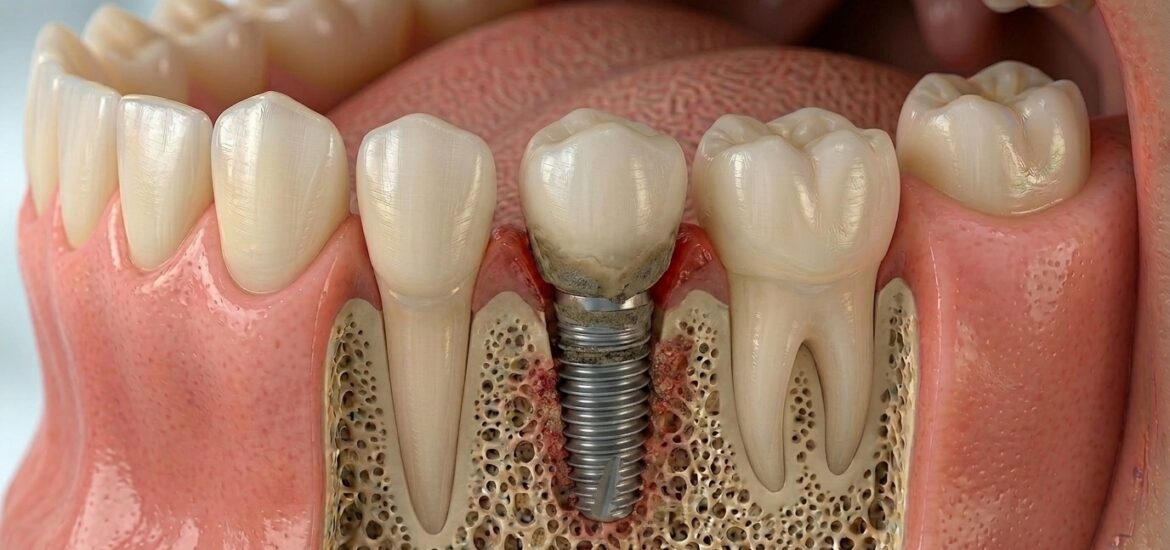
Dental implants last 15 to 25 years or a lifetime, and the titanium post that anchors the implant often stays in place for the rest of your life. The crown on top, the visible tooth, wears down sooner and usually lasts 10 to 15 years before it needs replacing. How long your implant lasts depends on your oral hygiene, your habits, and the health of the bone around it. This guide breaks down the lifespan of each part of an implant, why the post outlives the crown, what shortens or extends an implant’s life, and how implants compare to bridges and dentures over the long run.
How Long Do Dental Implants Last?
Dental implants last 15 to 25 years or a lifetime with proper care, according to Futch Dental 2025. The titanium post fuses with the jawbone and often lasts the rest of a patient’s life, while the crown on top typically lasts 10 to 15 years before wear calls for a replacement. This makes implants the longest-lasting tooth replacement available today.
Longest-lasting does not mean maintenance-free, though, because an implant is really an assembly of parts that age at different rates. The post and abutment beneath the gum can last decades, while the crown above the gum takes the daily force of chewing and wears the way any tooth surface would. Knowing which part lasts how long helps you plan for the one piece that eventually needs attention.
Attention to that one piece is far easier than starting over, since replacing a worn crown is a small procedure compared to placing a new implant. We place and restore dental implants for single teeth and full arches, and every plan is built around a lifespan that can stretch across decades when the implant is cared for well.
What Are the Parts of a Dental Implant and How Long Does Each Last?
A dental implant has three parts, and each part lasts a different length of time: the titanium post lasts a lifetime, the abutment lasts a lifetime, and the crown lasts 10 to 15 years. These three parts explain why an implant can be described as permanent even though one piece needs occasional replacement.
The titanium post is the screw-shaped root that a surgeon places into the jawbone, and it can last a lifetime with proper bone support and care, according to Cleveland Clinic. This post fuses to the bone and rarely needs replacing once it has healed. The abutment is the small connector that screws onto the post and rises just above the gum, and it too is built to last a lifetime, though it sees more mechanical stress than the buried post.
The crown sits on top of the abutment as the visible tooth, and it lasts 10 to 15 years on average, per Cleveland Clinic and Futch Dental. This crown takes every bite and every grind, so it is the one part that wears out on a schedule. The good news is that a worn crown can be swapped without touching the post below, which keeps the cost and the effort low. Our post on crown lifespan covers those numbers in more detail.
How Long Does the Crown on a Dental Implant Last?
The crown on a dental implant lasts 10 to 15 years on average, and high-quality porcelain crowns can last up to 25 years with optimal care, according to Arthur Glosman DDS. Crown lifespan varies more than any other part of an implant because it depends on the material, the location in the mouth, and daily habits like grinding.
Material sets the baseline for how long a crown holds up, with porcelain and zirconia lasting longer and resisting stains better than resin or metal blends. Zirconia and porcelain are the gold standard because they combine strength with a look that matches natural enamel. Location then adjusts that baseline, since a crown on a back molar absorbs far more chewing force than a crown on a front tooth and may wear sooner as a result.
Wearing sooner does not mean the whole implant is compromised, because only the crown gets replaced while the post stays put. When a crown does reach the end of its life, our same-day crown technology mills a custom replacement in a single visit, so you leave with a finished tooth rather than waiting weeks for a lab.
Why Do Dental Implants Last So Long?
Dental implants last so long because of osseointegration, the process where the jawbone grows directly onto the titanium post and locks it in place. Osseointegration turns a placed screw into a permanent part of your body, which is why no other tooth replacement matches an implant’s staying power.
Staying power comes from the bond itself, and that bond takes time to form. Osseointegration takes three to nine months depending on how quickly your body heals, according to Cleveland Clinic, and the first round of healing takes about a week. During those months the bone cells weave around the roughened titanium surface until the post cannot move, creating a foundation that behaves like a natural tooth root.
A natural tooth root does more than hold a tooth, and so does the implant post: it stimulates the jawbone and stops the bone loss that follows a missing tooth. This bone-preserving effect is a major reason implants outlast bridges and dentures, which sit on top of the gum and let the bone shrink underneath. Titanium implants have been used for over 50 years, according to a systematic review in the dental literature, and that track record is built on osseointegration doing its job. We handle every stage of implant placement from the first scan through the final crown.
What Factors Affect How Long Dental Implants Last?
Several factors affect how long dental implants last, and most of them are within your control. The biggest factors are oral hygiene, smoking, teeth grinding, overall health, jawbone density, crown material, and the location of the implant in the mouth.
- Oral hygiene. Brushing, flossing, and professional cleanings keep the gum around the implant healthy and prevent infection.
- Smoking. Smoking restricts blood flow in the gums and raises the risk of implant failure more than any other habit.
- Teeth grinding. Bruxism, the clenching or grinding of teeth, wears the crown and can loosen the implant over time.
- Overall health. Conditions like diabetes and immune disorders slow healing and raise the risk of complications.
- Jawbone density. A strong, thick jawbone holds the implant securely, while thin bone may need a graft first.
- Crown material. Porcelain and zirconia outlast resin and metal blends and hold their appearance longer.
- Implant location. Molars at the back of the mouth take more chewing force and may wear faster than front teeth.
Location and force explain why two identical implants can age differently in the same mouth. A front-tooth implant handles light biting and often keeps its crown for the full 15 years, while a molar implant grinds through tougher food every day and may reach its crown replacement sooner. Managing the factors you control, especially hygiene and smoking, does the most to push an implant toward the long end of its lifespan.
How Does Smoking Affect Dental Implant Lifespan?
Smoking shortens dental implant lifespan by restricting blood flow to the gums and slowing the healing that osseointegration depends on. Smokers see a noticeably lower survival rate, with five-year survival dropping to about 85 percent compared to roughly 95 percent for non-smokers, according to research summarized by SB Dental. Heavy smokers who use a pack a day or more can fall below 80 percent in the same period.
That drop happens because tobacco reduces the oxygen and blood the gums need to heal around the post, which raises the odds of early failure before the implant ever fuses. Quitting at least two weeks before surgery and eight weeks after markedly improves the odds. Beyond healing, smoking increases plaque and gum inflammation for the life of the implant, so the risk does not end once the post has integrated.
Why Do Dental Implants Fail?
Dental implants fail most often because of peri-implantitis, a gum infection around the implant that mirrors gum disease and can destroy the bone that holds the post. Peri-implantitis is the most common cause of late implant failure, and it usually starts with poor oral hygiene that lets bacteria build up along the gumline.
Bacteria at the gumline are only one path to failure, and the timing tells you a lot about the cause. Early failures, in the first weeks or months, usually trace back to poor bone integration, smoking, or infection before the post has fused. Late failures, years down the road, usually come from peri-implantitis, progressive bone loss, or excessive bite force from grinding. Most of these causes are preventable with good daily care and steady dental visits.
Prevention is why catching gum trouble early matters so much, since an inflamed gum treated promptly rarely becomes a lost implant. We offer gum disease treatment that protects both natural teeth and the tissue around an implant, keeping small problems from turning into big ones.
How Can You Make Dental Implants Last Longer?
You can make dental implants last longer by keeping the gum and bone around them healthy through daily care and regular checkups. The steps are simple, and they mirror the habits that protect natural teeth, with a few additions for patients who grind or smoke.
- Brush twice a day and floss once a day to clear plaque from the gumline around the implant.
- Visit the dentist every six months for cleanings and exams that catch problems early.
- Avoid smoking and limit alcohol, since both slow healing and raise the risk of failure.
- Wear a nightguard if you grind your teeth, which shields the crown from excess force.
- Avoid chewing ice, hard candy, or non-food objects that can crack or loosen the crown.
Six-month visits deserve special weight because they are where hidden trouble surfaces first. A dentist checks the gum, the bite, and the bone level around the implant, and spots early signs of infection or loosening long before they threaten the post. Patients in Sonora who keep up with routine checkups give their implants the best chance at a lifetime of service.
Do Dental Implants Last Longer Than Bridges or Dentures?
Yes, dental implants last longer than bridges or dentures by a wide margin. An implant post can last a lifetime and the crown lasts 10 to 15 years, while a dental bridge lasts about 15 years and dentures last around 7 to 10 years before they need replacing, according to Cleveland Clinic. This longevity gap is one of the main reasons patients choose implants despite the higher upfront cost.
The gap widens further when you account for the bone, because bridges and dentures sit on the gum and let the jawbone shrink, while implants preserve it. A dental crown on a bridge also requires shaving down the healthy teeth on either side of the gap, which can weaken them over the years.
Weakening the neighboring teeth is a cost that only shows up years later, and it is one an implant avoids entirely. Our post comparing bridges versus implants walks through the trade-offs in full.
| Tooth Replacement Option | Typical Lifespan | Replacement Cycle | Protects Jawbone? |
|---|---|---|---|
| Dental implant (post) | Often a lifetime | Rarely replaced | Yes |
| Dental implant (crown) | 10 – 15 years | Crown only, post stays | Yes |
| Dental bridge | About 15 years | Whole bridge replaced | No |
| Dentures | 7 – 10 years | Relined or replaced | No |
Sources: Cleveland Clinic 2026 dental implants guide; Futch Dental 2025 implant lifespan guide; Arthur Glosman DDS crown longevity data.
For patients who want the lowest starting cost, dentures remain a reasonable choice, but their shorter lifespan and the bone loss underneath them are the trade-offs to weigh against an implant’s staying power.
What Happens to Dental Implants After 20 Years?
After 20 years, most dental implants are still in place and working, with long-term survival rates holding high. A meta-analysis of prospective studies found a mean 20-year implant survival of about 92 percent, published in Clinical Oral Investigations, which reflects roughly four out of five to nine out of ten implants still functioning after two decades.
Those two-decade numbers build on even stronger short-term data, since a systematic review reported a 10-year implant survival rate of 96.4 percent. Survival dips gradually over time as a small share of implants meet problems like peri-implantitis or bone loss, but the decline is slow, and well-placed implants in healthy patients regularly outperform the averages. The steady growth of the treatment reflects that confidence, with U.S. dental implant prevalence projected to reach 23 percent by 2026, according to Clinical Oral Investigations.
What Age Should You Not Get Dental Implants?
There is no upper age limit for dental implants, but the minimum age is typically 18 because the jaw must be finished growing before a post is placed, according to Cleveland Clinic. Older adults are frequently excellent candidates, since the real requirement is healthy bone and gums rather than a birthday.
Healthy bone and gums matter more than age because the implant depends on the body integrating the post. A patient in their seventies with strong bone and good health is a better candidate than a younger patient with untreated gum disease or unmanaged diabetes. A cone-beam scan and a full exam during an implant consultation tell us whether the foundation is ready, and if it is not yet, we map out the steps to get it there.
Frequently Asked Questions
How Long Does Osseointegration Take?
Osseointegration takes three to nine months, depending on how quickly your body heals, according to Cleveland Clinic. During this time the jawbone fuses to the titanium post and locks it in place. The final crown only goes on once osseointegration is complete, because the bond is what gives the implant its long-term stability.
Are Dental Implants Permanent?
Dental implants are permanent in the sense that the titanium post is designed to stay in your jaw for life once it fuses with the bone. The crown on top is not permanent and typically needs replacing every 10 to 15 years, but the post beneath it rarely needs to be removed. This is why implants are considered the closest thing to a permanent tooth.
What Is the Success Rate of Dental Implants?
The success rate of dental implants is over 95 percent, according to Futch Dental, and a systematic review places 10-year survival at 96.4 percent. Success is highest in non-smokers with good oral hygiene and healthy bone. Regular dental visits and daily care keep the success rate high over the long term.
Does the Implant Post Ever Need to Be Replaced?
The implant post rarely needs to be replaced, because it is built to last a lifetime once it fuses with the jawbone. A post may need removal only in uncommon cases, such as injury, a serious infection like peri-implantitis, or the post coming loose. In most patients, the post outlives every other part of the implant.
How Painful Is Getting a Dental Implant?
Getting a dental implant is not painful during the procedure, because local anesthesia numbs the area completely and sedation is available for anxious patients. Most people feel mild soreness for a few days afterward, similar to a tooth extraction, which over-the-counter pain relievers manage well. We offer sedation dentistry for patients who want extra comfort during placement.
The Bottom Line
Dental implants last 15 to 25 years or a lifetime, and the titanium post that anchors them often stays in place for good, while the crown on top wears out every 10 to 15 years and can be swapped without disturbing the post. Long-term studies back this up, with 10-year survival around 96 percent and 20-year survival near 92 percent. The habits that decide where your implant lands in that range are largely yours to control: daily brushing and flossing, six-month checkups, avoiding smoking, and a nightguard if you grind.
An implant that is cared for well is one of the best long-term investments in your smile, and the first step is an exam that checks your bone, your gums, and your goals. If you are weighing implants and want a clear picture of what to expect over the decades ahead, the team at Jeff Berger Dentistry is here to help our Sonora neighbors and the surrounding foothill communities. Reach out whenever you are ready to schedule a consultation.


