


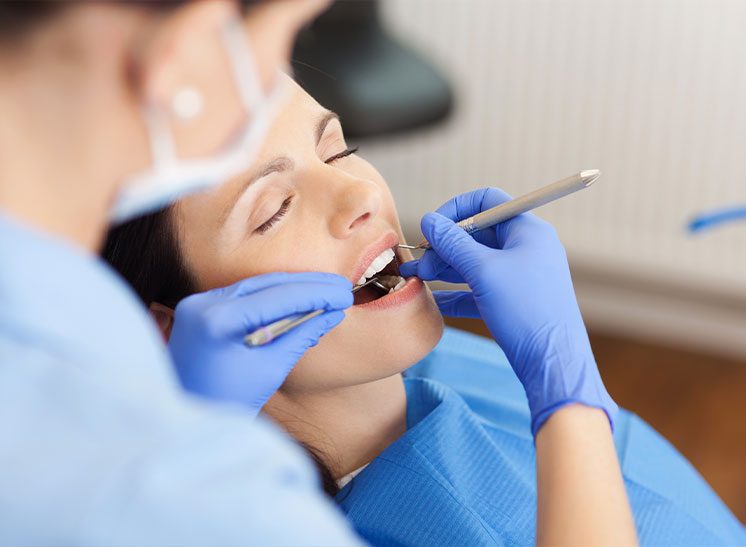
Dental sedation is safe for healthy patients when it is given by a trained and qualified professional. It carries minor, manageable side effects, and those effects increase with deeper levels of sedation and with underlying health conditions.
Safety is not something sedation simply has. It is produced by three specific things your dentist does: screening your health before the appointment, matching the depth of sedation to what you actually need, and watching your body throughout. Below we explain each one, along with what to disclose, what to avoid beforehand, and what the real numbers look like.
Is Sedation Dentistry Safe?
Yes, sedation dentistry is safe for healthy patients under a trained provider. Millions of sedation appointments happen every year in dental offices with no incident, and the lightest options carry a safety record measured in generations rather than years. Nitrous oxide has been used in dentistry since the mid-1800s.
The mid-1800s gives nitrous oxide the longest clinical history of any option on the list. Its safety profile is why a 2007 survey by the American Dental Association found that 70 percent of dental practices using any form of sedation employ nitrous oxide, and why the ADA describes the nitrous oxide and oxygen combination as the most used gaseous anesthetic in the world.
Widespread use only tells you part of the story. What makes any given appointment safe is the set of steps taken before, during and after it.
What Makes Sedation Dentistry Safe?
What makes sedation dentistry safe is screening, depth matching and monitoring. Those three practices do nearly all the work, and each one closes a different gap:
- Health screening. Your dentist reviews your medical history, current medications and past reactions to sedatives before choosing anything. This step catches drug interactions and health conditions that would change the plan.
- Depth matching. The right level is the lightest one that gets you comfortably through the appointment. Lighter levels ask less of your breathing and circulation, so matching correctly removes risk rather than managing it.
- Continuous monitoring. Your heart rate, blood pressure and oxygen saturation are tracked throughout. American Dental Association guidelines require continuous pulse oximetry for moderate sedation and every level below it.
Screening comes first because it happens before you ever sit in the chair. Chair-side work begins only after your health history clears, and a cleared health history tells your dentist which sedation depth your body can handle comfortably. That review is a standard part of planning any sedation appointment.
Who Needs Extra Screening Before Sedation?
Extra screening before sedation is needed by patients with breathing conditions, heart conditions, obesity, pregnancy, or a long list of current medications. Extra screening does not mean sedation is off the table. It means the conversation goes deeper before a choice is made.
Deeper conversations catch the things that matter. Breathing conditions such as asthma, chronic obstructive pulmonary disease and sleep apnea affect how your airway behaves under sedation, so they shape which depth is appropriate. Heart conditions matter for the same reason, since sedatives influence heart rate and blood pressure.
Pregnancy is handled differently again. Routine checkups continue during pregnancy, but procedures involving sedation are usually postponed until after delivery, because some sedatives can affect fetal development. Dr. Berger reviews all of this before recommending anything, and in some cases will ask for clearance from your physician first.
Is Dental Sedation Safe for Seniors?
Yes, dental sedation is safe for seniors, with closer attention to medication interactions and dosing. Older patients often take multiple prescriptions, and several common ones interact with sedatives, so the medication list carries more weight than age itself.
Age itself is not a disqualifier. Nitrous oxide in particular suits older patients well, since it clears through the lungs within minutes rather than being processed by the liver and kidneys over hours.
Is Sedation Safe if You Have High Blood Pressure?
Yes, sedation is safe if you have high blood pressure that is controlled and disclosed. Controlled blood pressure with monitoring throughout an appointment presents very little difficulty, and sedation can actually help, since anxiety raises blood pressure on its own.
Raised blood pressure from fear is a real effect that a calm appointment avoids. Uncontrolled hypertension is a different situation and calls for medical clearance before any sedation is planned, which is one more reason the screening conversation matters.
What Should You Tell Your Dentist Before Sedation?
You should tell your dentist everything about your health, even the parts that seem unrelated. Screening only works on the information it receives, so the disclosure list below is the single most useful thing a patient controls. Cover these in order:
- Every prescription medication you take, including doses and how recently you started them.
- Over-the-counter medications, vitamins and herbal supplements, several of which interact with sedatives.
- Any allergy, especially to medications, and what the reaction was.
- Past reactions to sedation or anesthesia, yours or a close family member’s.
- Chronic conditions affecting the heart, lungs, liver, kidneys or blood pressure.
- Whether you are pregnant or might be.
- Any recent illness, especially a cold, cough or chest infection in the last two weeks.
- Alcohol, tobacco or recreational substance use, answered honestly.
Honest answers on that last point matter more than patients expect, since several substances interact with sedatives in ways that change dosing. Much of this information gets collected on our patient forms before your visit, which gives us time to review it properly rather than reading it minutes before treatment.
What Not to Do Before Dental Sedation
Before dental sedation, do not eat or drink outside your fasting window, drink alcohol, take unapproved medications, or plan to drive yourself home. Each of those affects either how the sedative behaves or how safely you recover.
Recovery planning starts with transportation. Oral and intravenous sedation both impair reaction time for the rest of the day, so arrange a ride before the appointment rather than on your way out. Nitrous oxide is the one option that leaves you free to drive.
Driving aside, avoid alcohol for at least 24 hours beforehand, since it compounds the effect of sedatives in ways that are hard to predict. Skip any supplement your dentist has not cleared, follow the fasting window you were given exactly, and call the office if you wake up with a cough or fever rather than pushing through. Arriving unwell is the most common reason a sedation appointment gets rescheduled, and rescheduling is the right call.
What Happens When a Dentist Sedates You?
When a dentist sedates you, the medication is given first, your comfort is confirmed, and local anesthetic is placed only once you are relaxed. The order is deliberate, because the injection is the part anxious patients dread most.
Dreaded moments pass unnoticed under sedation. With nitrous oxide you breathe through a small nose mask and feel the effect within three to five minutes. With oral sedation you take the prescribed medication about an hour beforehand and arrive already calm.
Calm patients are then monitored continuously while treatment proceeds, and the same team watches you afterward until you are steady enough to leave. That full sequence is what a sedation treatment visit looks like from arrival to discharge.
How Does a Dentist Monitor You During Sedation?
A dentist monitors you during sedation by tracking your heart rate, blood pressure and blood oxygen saturation throughout the appointment. Oxygen saturation is measured by pulse oximetry, a small clip on your fingertip that reads continuously.
Continuous reading is the point. A drop in oxygen shows on the monitor well before anyone could notice it by looking at you, which turns a potential problem into a small adjustment. American Dental Association guidelines require this monitoring for moderate sedation and deeper, and the monitoring equipment sits in the room for the entire visit rather than being checked at intervals.
Worth asking about: a statewide survey of dentists found that 75 percent provide some form of sedation, and 4 percent of those reported using no patient monitoring system at all. Asking any office how they will monitor you is a reasonable question, and any good answer will be specific.
What Training Do Dentists Need to Provide Sedation?
Dentists need formal training that scales with the depth of sedation they provide, set out in the American Dental Association’s anesthesia guidelines. Those requirements climb steeply, which is exactly why lighter sedation is more widely available than deeper sedation.
| Sedation Level | Training Required | Monitoring Required | People in the Room |
|---|---|---|---|
| Minimal sedation | Competency training plus current life support certification | Pulse oximetry | Dentist plus assistant |
| Oral moderate sedation | 24 classroom hours plus 10 supervised patients | Continuous pulse oximetry | Dentist plus trained support |
| IV moderate sedation | 60 classroom hours plus 20 supervised infusions | Continuous pulse oximetry | Dentist plus trained support |
| Deep sedation or general anesthesia | Completed advanced residency training | Full vital sign monitoring | Minimum of three trained individuals |
Read down that table and the pattern is obvious. The deeper the sedation, the more the guidelines demand, which means the lightest option carries the lightest requirements for a reason.
Is Nitrous Oxide Safe?
Yes, nitrous oxide is safe, and it is the safest sedation option available in dentistry. The gas is engineered for safety at the equipment level, not just the clinical level. The American Dental Association notes that at least 12 audio and visual safety features have been built into nitrous oxide delivery systems specifically to help avoid adverse events, and describes an inherent safety margin in its proper administration.
Margins like that show up in the outcome data. A clinical series of patients sedated with nitrous oxide recorded a total adverse reaction rate of 5.39 percent, and the overwhelming majority of those reactions were brief vertigo, which accounted for 81.8 percent of them. A separate 762-patient series recorded 8.3 percent mild events and 0.2 percent serious events.
Serious events at two in a thousand, in a setting where the gas can be reduced or stopped instantly, is a strong record for any medical intervention. At concentrations up to 50 percent, nitrous oxide is classified as mild sedation, and it clears through your lungs within 15 to 30 minutes of the mask coming off.
Is Laughing Gas Safe for Children?
Yes, laughing gas is safe for children, and it is the sedation option used most often for young patients. A survey of American Academy of Pediatric Dentistry members found that 97 percent of responding pediatric dentists use nitrous oxide in their offices.
Offices use it because children tolerate it well and recover from it quickly. Dosing is adjusted for the child throughout the appointment, and the same nose mask that delivers the gas delivers pure oxygen afterward, which is part of what makes family dentistry visits manageable for anxious kids.
What Are the Side Effects of Dental Sedation?
The side effects of dental sedation are mild and temporary for nearly everyone. Drowsiness, dry mouth, mild nausea and a light headache are the ones patients report most, and they clear within a day.
Clearing within a day is the norm because the medication simply finishes leaving your system. Nitrous oxide produces the fewest effects of any option, since it exits through your lungs instead of being processed by your liver and kidneys. Deeper sedation leaves more behind and takes longer to shed, which is the entire reason the recovery windows differ.
Serious reactions are rare and are the specific thing screening and monitoring exist to prevent. Allergic reactions to a sedative and changes in breathing are the two that clinicians watch for, and both are caught quickly when vital signs are tracked continuously by a trained team. Telling your dentist about every allergy and every medication is what keeps that category as small as it is, and it is one of the dental questions we cover with patients before any sedation visit.
How Long Do Sedation Side Effects Last?
Sedation side effects last 15 to 30 minutes after nitrous oxide and up to 24 hours after oral or intravenous sedation. Nitrous oxide effects fade almost as soon as you breathe pure oxygen at the end of treatment.
Treatment with deeper options leaves grogginess that tapers across the day. Rest, water and a cleared schedule handle it, and anything still lingering the next morning is worth a call to the office.
Is It Better to Be Sedated for a Tooth Extraction?
It is better to be sedated for a tooth extraction if you feel anxious about it, have a strong gag reflex, or are having more than one tooth removed. Local anesthetic already handles the pain, so sedation is about the rest of the experience.
The rest of the experience is where most extraction dread actually lives. Patients under sedation feel pressure without sharpness, and many recall very little afterward, which changes how they feel about returning for follow-up care.
Follow-up care matters because avoidance compounds. The same is true for anyone who has been putting off a needed procedure because of how the last one felt, including patients who have lived through a difficult root canal comfort experience elsewhere.
How We Keep Sedation Safe at Our Office
We keep sedation safe at our Sonora office by starting with your health history and staying at the lightest level that works for you. Our three options are nitrous oxide, conscious sedation and the NuCalm relaxation system, and all three sit at the gentler end of the sedation range.
The gentler end is where most patients belong. Nitrous oxide handles mild nerves and leaves your system before you reach the parking lot. Conscious sedation goes deeper for patients whose anxiety needs more, while keeping you awake and able to communicate with us.
NuCalm is our drug-free option, a relaxation system that eases you toward the first stages of sleep and lets you leave feeling refreshed rather than groggy. No medication means no interactions to screen for and no recovery window, which makes it a straightforward choice for patients who want calm without anything entering their bloodstream.
Every one of those choices starts the same way, with a conversation about your health, your medications and what has made past appointments hard. That conversation is the foundation of the comfortable dental care we aim to give every patient.
Frequently Asked Questions
How Long Does It Take to Remove a Tooth Under Sedation?
Removing a tooth under sedation takes about the same time as removing it without sedation, usually 20 to 40 minutes for a straightforward extraction. Sedation does not speed up the dentistry, though it often makes the appointment feel much shorter. Relaxed patients also hold still more easily, which can shorten longer procedures.
Who Should Not Have Dental Sedation?
People who should not have dental sedation include those with a known allergy to the sedative, those with uncontrolled respiratory or heart conditions, and in most cases those who are pregnant. Certain medication combinations also rule out specific options. A full health review identifies these before anything is scheduled, and a lighter option or local anesthetic alone is often still available.
Can You Drive After Dental Sedation?
You can drive after nitrous oxide, and you cannot drive after oral or intravenous sedation. Nitrous oxide clears through your lungs within 15 to 30 minutes, leaving no impairment. The other options require a full 24 hours before driving, even on days when you feel fine after a few hours.
Is Sedation Safe if You Have Sleep Apnea?
Sedation can be safe with sleep apnea, though it requires a careful review and often points toward the lightest available option. Sleep apnea affects how your airway behaves when you relax, which is exactly what sedatives cause. Tell your dentist about a diagnosis and about any device you use at night, since both shape the recommendation.
What Questions Should You Ask Your Dentist About Sedation?
The questions to ask your dentist about sedation are which level they recommend and why, how they will monitor you, who else will be in the room, and what training they hold. A qualified provider answers all four specifically and without hesitation. Ask what recovery will look like as well, so you can plan the rest of your day.
Can Sedation Be Stopped Partway Through a Procedure?
Yes, sedation can be stopped partway through a procedure, and nitrous oxide stops fastest. Turning off the gas and switching to pure oxygen reverses the effect within minutes. Oral sedation cannot be switched off the same way, which is one more reason the level is matched carefully before the appointment starts.
The Bottom Line
Dental sedation is safe for healthy patients when a trained dentist screens your health history, matches the depth to what you actually need, and monitors your vital signs throughout. Side effects are mild and short-lived for nearly everyone, serious reactions are rare, and nitrous oxide in particular carries a safety record built over more than 175 years of use and reinforced by equipment engineered specifically to prevent problems. The part you control is disclosure, so tell your dentist everything, including the details that feel irrelevant.
If worry about safety has been the thing standing between you and treatment you know you need, one honest conversation usually settles it. We walk patients across Tuolumne County through exactly these questions before anything is scheduled. Call Jeff Berger Dentistry to talk it through, or schedule a visit when you are ready.


