


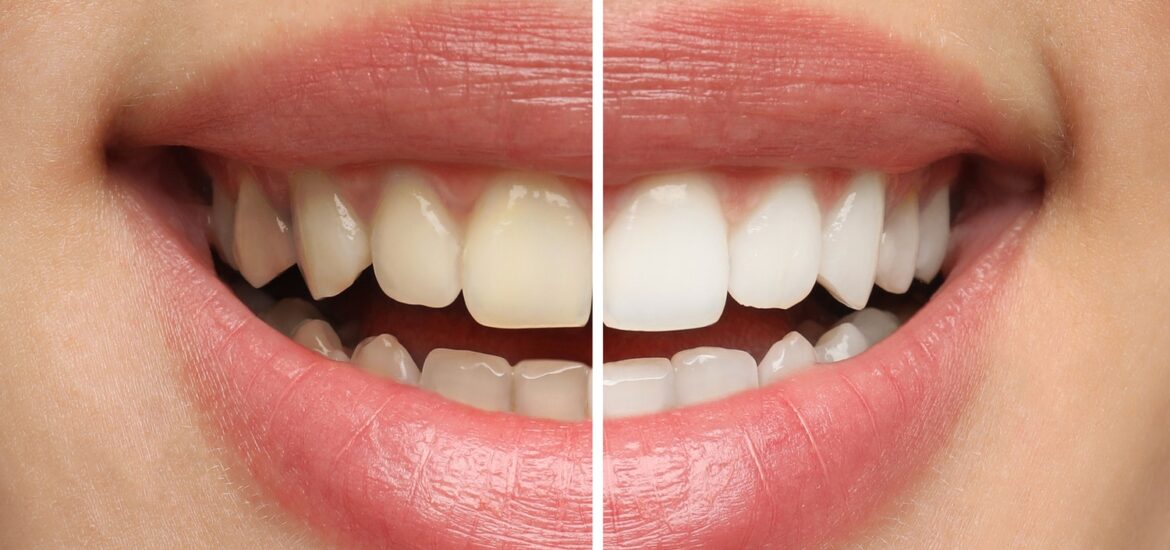
Professional teeth whitening uses higher concentrations of peroxide applied under a dentist’s supervision to brighten teeth up to eight shades in a single visit. At-home whitening kits use lower concentrations and typically lighten teeth by one to two shades over several weeks. Both options work, but the speed, safety, strength, and lasting power are very different. This article compares the two side by side so you can choose the right option for your smile and your budget.
Does Professional Teeth Whitening Work Better Than At-Home Whitening
Professional teeth whitening does work better than at-home whitening in terms of speed and shade improvement. According to the American Academy of Cosmetic Dentistry (AACD), in-office whitening can brighten teeth by up to eight shades in a single one-hour session. Over-the-counter whitening strips and trays typically achieve one to two shades of improvement over two to four weeks of daily use.
The biggest reason for this difference is the concentration of the active ingredient. In-office whitening gels contain 25% to 40% hydrogen peroxide, according to the ADA. Over-the-counter products contain much lower levels, usually 3% to 10% hydrogen peroxide. The higher concentration breaks down stain molecules faster and reaches deeper into the enamel.
Professional whitening also comes with built-in safety measures. Your dentist protects your gums with a barrier before applying the gel, monitors your teeth for sensitivity throughout the session, and adjusts the treatment if needed. With at-home products, there is no supervision, and overuse or incorrect application can lead to gum irritation or uneven results.
A systematic review published in the NIH found that all types of bleaching are effective at changing tooth color, but at-home treatments with dentist-prescribed custom trays showed fewer relapses over time compared to in-office treatment alone. The best long-term results come from combining in-office whitening with periodic at-home touch-ups using custom trays from your dentist.
How Professional Whitening Works
Professional teeth whitening begins with a thorough cleaning and exam. Your dentist checks for cavities, gum disease, and any restorations like crowns or fillings that will not respond to bleaching. This step is important because whitening gel can cause sensitivity on teeth with untreated decay.
During the in-office session, a protective barrier is placed over your gums. Then a high-concentration hydrogen peroxide gel is applied directly to your teeth. Some systems use a special light to accelerate the bleaching process. The gel stays on for 15 to 20 minutes, and the process may be repeated two or three times during the same appointment. The entire visit usually takes about 60 to 90 minutes.
We also offer take-home custom trays made from impressions of your teeth. These trays fit snugly and hold a professional-strength gel against your teeth without leaking onto your gums. You wear them for a set amount of time each day, and results typically appear within one to 14 days. Custom trays from your dentist deliver more consistent results than one-size-fits-all store trays because the fit is precise.
According to Johns Hopkins Medicine, the ADA has granted its seal of approval to some whitening products and recommends that patients talk to their dentist about which options are most effective and safe to use. We can help you decide whether in-office whitening, custom take-home trays, or a combination of both is the right fit for you here in Sonora.
How At-Home Whitening Products Compare
At-home whitening products come in several forms. Whitening strips are the most popular over-the-counter option. They use a thin layer of hydrogen peroxide, usually between 3% and 10%, pressed against the teeth for 30 minutes to an hour each day. The ADA notes that a 2020 systematic review found whitening strips to be more effective than whitening toothpastes and paint-on gels, but still less effective than professional treatments.
Whitening toothpastes rely mostly on abrasives to scrub away surface stains. Some contain low levels of peroxide, but the contact time is too short to produce significant bleaching. The ADA states that whitening toothpastes can lighten teeth by about one to two shades at most. They are best used for maintenance after a professional whitening treatment, not as a standalone solution.
LED whitening kits sold online often claim to speed up results, but the evidence is mixed. The ADA’s guidance on whitening notes that the effectiveness of light-activated systems depends heavily on the concentration of the gel being used. A low-concentration gel paired with an LED light will not match the results of a high-concentration gel applied by a dentist.
The biggest limitation of all at-home products is the lack of customization. Store-bought trays do not fit your teeth precisely, which means the gel can pool on your gums or miss certain teeth entirely. There is also no dentist screening your mouth for problems before you start. If you have untreated cavities or gum disease, whitening products can cause pain and make those conditions worse.
Who Should Choose Professional Whitening
Professional whitening is the better choice if you want dramatic results quickly. It is also the safer option if you have sensitive teeth, existing dental work, or a history of gum problems. Your dentist can tailor the treatment to your specific needs and manage any sensitivity that comes up during the session.
People with deep or stubborn stains from coffee, red wine, tea, or tobacco benefit most from professional whitening. These stains penetrate below the surface of the enamel and respond better to higher-concentration peroxide applied under controlled conditions. The AACD reports that professional whitening can address stains that over-the-counter products simply cannot reach.
If dental anxiety has kept you from getting whitening done in a dental office, sedation dentistry can help. We offer conscious sedation, the NuCalm relaxation system, and nitrous oxide for patients across Sonora who need extra comfort during any procedure. Whitening is already one of the most comfortable dental treatments, but sedation options remove any remaining worry.
At-home kits can be a good choice if your staining is mild and you prefer a gradual approach. They also work well as a maintenance tool after professional whitening. The best strategy for many patients is to start with an in-office session for immediate results and then use dentist-prescribed custom trays at home to maintain those results over time.
Professional vs At-Home Whitening Comparison
This table compares the two approaches across the factors that matter most. Data is sourced from the American Dental Association (ADA), the American Academy of Cosmetic Dentistry (AACD), the National Institutes of Health (NIH), and Johns Hopkins Medicine.
| Factor | Professional (In-Office) | Dentist Take-Home Trays | Over-the-Counter Products |
| Peroxide Concentration | 25% to 40% hydrogen peroxide | 10% to 22% carbamide peroxide | 3% to 10% hydrogen peroxide |
| Shade Improvement | Up to 8 shades in one visit | 3 to 6 shades over 1 to 2 weeks | 1 to 2 shades over 2 to 4 weeks |
| Time to See Results | Immediate (1 session) | 1 to 14 days | 2 to 4 weeks of daily use |
| Results Last | 6 months to 2 years | 6 months to 2 years | 2 to 6 months |
| Cost | $300 to $900 per session | $200 to $400 | $20 to $100 |
| Gum Protection | Yes (barrier applied by dentist) | Custom-fit trays limit gel contact | None (risk of gum irritation) |
| Dental Screening First | Yes | Yes | No |
Sources: American Dental Association (ADA), American Academy of Cosmetic Dentistry (AACD), National Institutes of Health (NIH), Johns Hopkins Medicine
How to Keep Your Teeth White After Treatment
Keeping your teeth white after treatment starts with good daily habits. Brush twice a day with a fluoride toothpaste and floss once a day to prevent new stains from building up. Regular dental cleanings every six months remove surface stains and plaque that brushing alone can miss.
Limit the foods and drinks that cause the most staining. Coffee, tea, red wine, dark berries, soy sauce, and tomato-based sauces are the biggest offenders. If you do drink coffee or tea, using a straw helps keep the liquid away from the front of your teeth. Rinsing your mouth with water right after eating or drinking staining foods also helps.
Tobacco is the single worst habit for tooth staining. According to the ADA, tobacco stains are some of the most stubborn and tend to build up quickly even after whitening. Quitting tobacco protects your whitening investment and your overall oral and general health.
Periodic touch-ups extend your results significantly. A review published in the NIH found that the best long-term whitening outcome comes from following in-office treatment with monthly at-home touch-ups. We can set you up with custom take-home trays so you can maintain your results between professional visits. Most patients in Sonora find that one or two touch-up sessions per year keep their smile bright.
Frequently Asked Questions
Why Are My Teeth Still Yellow After Brushing Two Times a Day?
Your teeth may still be yellow after brushing two times a day because brushing removes surface plaque and food debris but cannot change the natural color of your enamel or the dentin underneath it. Yellowing is often caused by thin or translucent enamel that lets the naturally yellow dentin layer show through. Staining from coffee, tea, wine, and tobacco also builds up over time in ways that regular toothpaste cannot reverse. According to the ADA, whitening toothpaste can lighten teeth by about one to two shades, but deeper discoloration requires professional bleaching or dental veneers to correct.
What Teeth Cannot Be Whitened?
The teeth that cannot be whitened include dental crowns, veneers, fillings, and bonding. These materials are made of porcelain, composite resin, or metal, and they do not respond to peroxide-based bleaching. If you whiten your natural teeth, any existing restorations may look darker by comparison. Teeth with deep intrinsic staining from medications like tetracycline or from excess fluoride exposure during childhood can also be very difficult to whiten with bleaching alone. In those cases, cosmetic dentistry options like veneers or bonding may be more effective.
Why Do My Teeth Go Yellow After Whitening?
Your teeth go yellow after whitening because the bleaching effect is not permanent. Over time, the same staining agents that discolored your teeth before, like coffee, tea, red wine, and tobacco, will build up again on the enamel surface. According to the NIH, whitening results typically last six months to two years depending on your diet, oral hygiene, and whether you use touch-up treatments. Periodic at-home touch-ups with custom trays from your dentist are the most effective way to extend your results and prevent yellowing from returning.
How Long Does Professional Teeth Whitening Last?
Professional teeth whitening typically lasts six months to two years, according to the AACD. The exact duration depends on your diet, tobacco use, oral hygiene habits, and whether you do periodic touch-ups. Patients who avoid heavy staining and use custom take-home trays for maintenance see the longest-lasting results. We recommend scheduling a touch-up visit or using your take-home trays once or twice a year to keep your smile looking its best. You can call us at 209-532-2915 to ask about our whitening options here in Sonora.
How Many Shades Whiter Can Professional Whitening Make Your Teeth?
Professional whitening can make your teeth up to eight shades whiter in a single in-office session, according to the AACD. Dentist-prescribed take-home trays can achieve three to six shades of improvement over one to two weeks. The number of shades you gain depends on the type and severity of your staining, the condition of your enamel, and whether you have any dental restorations. During a consultation, Dr. Jeff Berger can evaluate your teeth and give you a realistic expectation of how much improvement is possible.
Why Do Dentists Push Deep Cleanings?
Dentists recommend deep cleanings when there are signs of gum disease, such as pockets deeper than three millimeters between the gums and teeth, tartar buildup below the gumline, or bleeding gums. According to the CDC, nearly 46% of adults over 30 have some form of gum disease. A deep cleaning, also called scaling and root planing, removes bacteria and tartar from below the gumline that a regular cleaning cannot reach. This is not an upsell. Untreated gum disease can lead to bone loss, tooth loss, and complications with any cosmetic work you want done. We always treat gum disease first to protect the long-term success of procedures like whitening and veneers.
Is Professional Teeth Whitening Safe?
Professional teeth whitening is safe when performed by a licensed dentist, according to both the ADA and Johns Hopkins Medicine. The most common side effect is temporary tooth sensitivity, which usually resolves within a few days after treatment. Your dentist applies a protective barrier to shield your gums from the high-concentration gel and monitors your teeth throughout the session. The ADA has granted its Seal of Acceptance to whitening products that meet its safety and effectiveness standards. We use advanced dental technology and proven whitening systems to deliver safe, predictable results for patients across Tuolumne County.
What It All Comes Down To
Professional whitening and at-home whitening both work, but they serve different needs. If you want fast, dramatic results with the safety of a dentist supervising the process, professional whitening is the clear winner. If you have mild staining and want to brighten your smile gradually on your own schedule, at-home products can help. The best results come from combining both, starting with a professional session and maintaining your results with custom take-home trays from your dentist.
If you live in Sonora, Jamestown, Columbia, Twain Harte, or anywhere in Tuolumne County, Dr. Jeff Berger and the entire team at Jeff Berger Dentistry can help you find the whitening option that fits your goals. We offer both in-office whitening and take-home custom trays with results in as few as one to 14 days.
Call 209-532-2915 today to schedule a whitening consultation. We are located at 19604 Mono Way in Sonora and welcome patients from across the Sierra Nevada foothills and Gold Country. A brighter smile may be closer than you think.


